
OHS: Rain, Storms, and Severe Weather Safety: Protecting Employees During Changing Conditions
Article #23 of #25 in the Occupational Health and Safety Series
Phase 2: Practical Health and Safety Topics
Introduction
Weather conditions can change quickly in many parts of South Africa. A normal working day can start with mild conditions and then shift into heavy rain, strong wind, lightning, local flooding, falling temperatures, or poor visibility. For small businesses with employees who work outdoors, travel between sites, load vehicles, climb ladders, work at height, drive long distances, guard outdoor entrances, or move between buildings, changing weather can create serious health and safety risks. Even businesses that mostly operate indoors are not fully protected from these hazards. Rain can create slippery entrances and walkways, storms can affect electrical safety and emergency access, and severe weather can place drivers and field staff at risk long before they return to the workplace.
One of the biggest problems with bad weather in small businesses is that it is often treated as “just part of the job.” Employees may be expected to continue working in rain, wind, or storm conditions because the work is urgent, the customer is waiting, or the team is trying to finish before the end of the day. Sometimes the pressure is practical. A contractor may already be on site. A delivery must still be made. A technician may have travelled a long distance to reach a client. A security guard still needs to remain on duty. A construction team may be trying to stay on schedule. A cleaner may still need to move between buildings. In these situations, workers can easily be exposed to hazards that become much more dangerous when weather conditions change.
Rain, storms, and severe weather can affect workplace safety in many ways. Wet surfaces increase the risk of slips and falls. Strong winds can make ladders, scaffolding, signage, roofing work, and outdoor equipment more dangerous. Lightning creates a major risk for outdoor workers, especially those in open areas, on rooftops, near metal structures, or working with tools and equipment. Heavy rain can reduce visibility for drivers, create pooling water around entrances and loading areas, and increase the risk of vehicle incidents. Flooded pathways, muddy ground, and water entering workspaces can create trip hazards, electrical risks, and access problems. Storms can also interrupt communication, transport, deliveries, and emergency response.
For small business owners, this means severe weather should not be handled only through common sense and last-minute decisions. It should form part of practical health and safety planning, especially if employees work outdoors, travel regularly, or perform tasks that become more hazardous in wet or stormy conditions. The goal is not to stop all work every time it rains. The goal is to recognise when weather has changed the level of risk and to respond sensibly. In some cases, the right response may be simple housekeeping and extra caution. In other cases, the safest decision may be to delay, pause, reschedule, or stop a task until conditions improve.
In this article, we will look at how rain, storms, wind, lightning, flooding, and changing weather conditions can affect workplace safety, which workers may be most exposed, and what practical steps small businesses can take to protect employees when conditions change unexpectedly.
Why Severe Weather Is a Workplace Safety Issue
Weather becomes a workplace safety issue when it changes the risk of the task being done, the safety of the environment, or the worker’s ability to perform safely. A task that seems manageable in dry, calm conditions may become unsafe in heavy rain, strong wind, or lightning.
Severe weather can:
make walking surfaces slippery
reduce visibility for drivers and outdoor workers
make ladders and elevated work unstable
increase the risk of falling objects or blowing materials
create electrical hazards where water is present
slow reaction times and increase stress
force workers to rush or take shortcuts
trap workers in unsafe areas or delay access to help
affect communication and emergency response
The more exposed the worker is to the outdoor environment, the more important weather planning becomes.
Which Small Businesses Should Pay Attention to Weather Risk?
Rain, storms, and severe weather are relevant to many types of small businesses, including:
construction and building trades
electrical, CCTV, solar, plumbing, and maintenance businesses
roofing, painting, signage, and external repair teams
security companies with outdoor guards and patrol staff
cleaning teams moving between buildings or working on outdoor surfaces
landscaping, gardening, and grounds maintenance businesses
delivery and logistics operations
farming and agricultural businesses
event setup teams
warehouse and retail businesses with outdoor loading areas
any business with drivers, technicians, or field service staff
Even office-based businesses should think about weather if employees travel for work, use parking areas and walkways, or receive customers through exposed entrances.
The Main Weather-Related Hazards Small Businesses Face
1. Slips, trips, and falls on wet surfaces
Rain creates one of the most common workplace risks: wet, slippery floors and walking surfaces. This may affect:
building entrances
tiled reception areas
outdoor paths and stairs
workshop floors
loading bays
yard areas
storerooms with wet shoes and water tracked inside
car parks and paved walkways
A simple wet entrance can quickly lead to a fall if there is no matting, no warning sign, poor drainage, or poor housekeeping.
2. Reduced visibility for drivers and mobile workers
Heavy rain, mist, spray, and storm conditions can make driving much more dangerous. Visibility may be poor, roads may become slippery, and stopping distances may increase. Drivers may also face flooded roads, fallen branches, potholes hidden by water, and other motorists behaving unpredictably in bad weather.
3. Wind-related hazards
Strong wind can affect:
ladders
scaffolding
roofing work
work at height
outdoor signage
stacked materials
lightweight equipment
open vehicle loads
temporary structures and covers
A gust of wind can destabilise a person on a ladder, blow materials into walkways, or make it unsafe to handle large objects outdoors.
4. Lightning and thunderstorms
Lightning is one of the most serious weather-related hazards for outdoor workers. It is especially dangerous for employees:
working in open areas
standing on rooftops
using ladders
working near metal structures
carrying long metal tools
guarding open entrances or gates
working in fields, yards, or construction sites
When thunderstorms develop, employers should not treat lightning as a minor inconvenience. It can be life-threatening.
5. Water near electrical equipment
Rainwater, leaks, pooled water, and flooding can create electrical hazards where tools, extension leads, plugs, distribution boards, or damaged equipment are present. A normally safe electrical setup can become unsafe if water enters the area or if workers handle equipment with wet hands or in wet footwear.
6. Flooding, mud, and unstable ground
Heavy rain can change ground conditions quickly. Outdoor areas may become muddy, slippery, uneven, or waterlogged. Vehicles may struggle for traction, workers may trip or slip, and equipment may become harder to move safely. Flooded areas can also hide holes, drains, debris, or damaged surfaces.
Why Outdoor Work Becomes More Dangerous in Rain and Storms
Outdoor work often already involves hazards such as heights, tools, lifting, electricity, vehicles, and uneven ground. Rain and storms make many of these hazards worse.
For example:
a ladder that is safe in dry weather may become slippery and unstable in rain
a technician working on an outside wall may lose grip on wet tools
a security guard may have poor visibility and slippery footing during patrols
a delivery worker may rush in the rain and fall while carrying stock
a construction worker may continue on a roof while wind and lightning risks are increasing
Weather does not create a completely new workplace every time, but it can change the risk level enough that the original work plan is no longer safe.
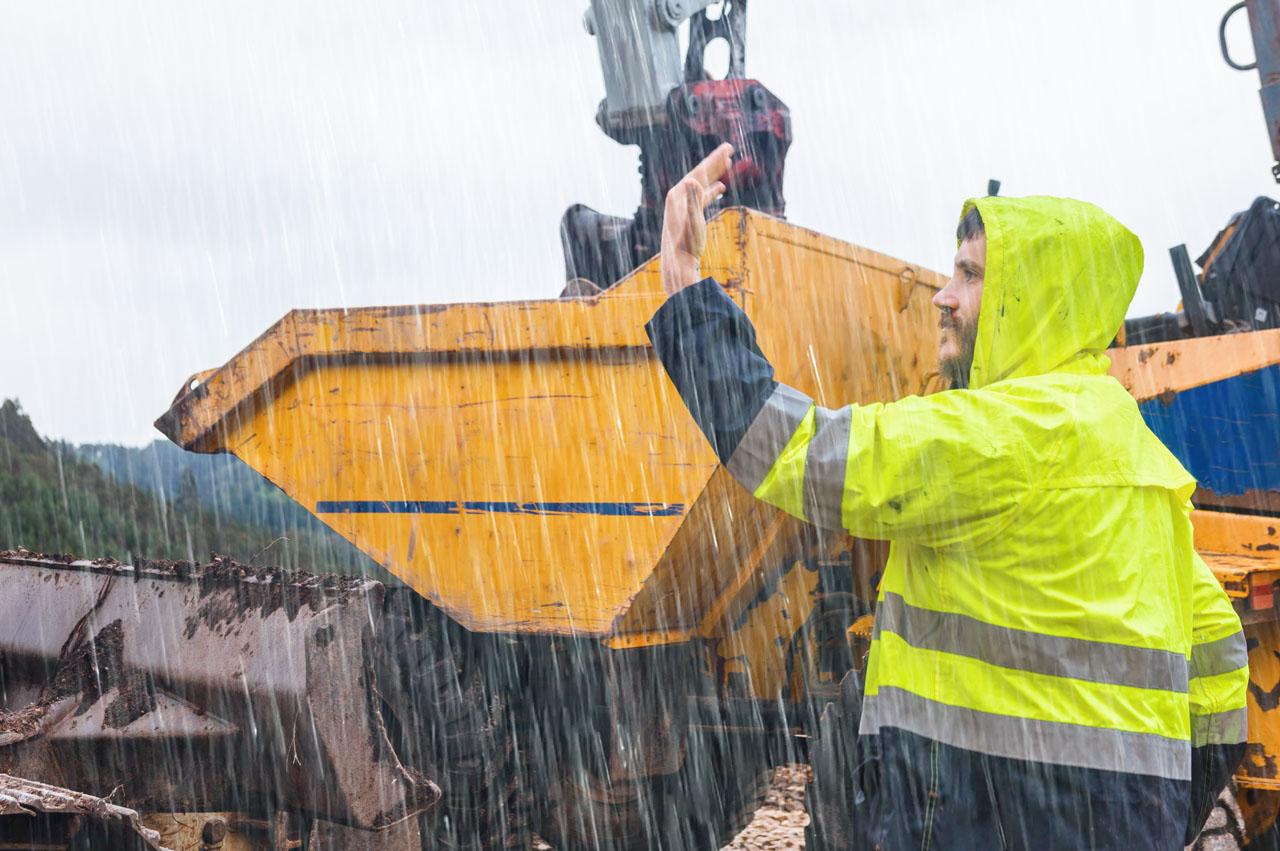
Rain and Weather Risks for Indoor Businesses
Indoor workplaces are not excluded from weather-related safety issues. Heavy rain and storms can still affect:
entrance areas and reception floors
leaking roofs or ceilings
electrical equipment near water ingress
stairways and corridors where wet shoes create slip hazards
loading and unloading areas
staff travel to and from work
customer access and emergency exits
backup power, alarms, and communication systems during storms
This is why severe weather planning should not be seen as relevant only to construction or agriculture.
Practical Steps to Manage Rain and Severe Weather Risks
1. Monitor weather conditions and do not ignore warning signs
If your business relies on outdoor work, travel, or exposed sites, someone should pay attention to weather conditions and changing forecasts, especially when storms, high winds, or heavy rain are expected. Even a basic weather check can help a business prepare rather than react too late.
2. Decide in advance which tasks should stop in unsafe weather
A small business should think ahead about which activities may need to be paused or rescheduled in certain conditions. For example:
work at height during strong wind or lightning
roof work in rain
outdoor electrical work in wet conditions
ladder work during storms
long-distance travel in severe weather
loading and unloading in flooded or unstable areas
It is easier to make safe decisions when the business has already discussed the issue before the weather turns bad.
3. Improve slip prevention during wet weather
Practical controls may include:
entrance mats
wet floor signs
quicker cleaning of tracked-in water
non-slip footwear where appropriate
keeping walkways clear
fixing drainage or pooling problems
checking stairways and ramps more often during rain
Small housekeeping steps can prevent a large number of wet-weather injuries.
4. Secure outdoor materials and equipment
Loose materials, signs, covers, bins, ladders, and stacked items can become hazards in strong wind. Outdoor areas should be checked and secured before or during severe weather where possible.
5. Protect electrical equipment from water exposure
Electrical equipment should not be used in unsafe wet conditions. Businesses should check:
where extension leads are placed
whether plugs or connections are exposed to water
whether outdoor work should be postponed
whether damaged equipment is being used in poor weather
whether water ingress has affected indoor electrical areas
6. Give workers clear authority to stop and report unsafe conditions
Employees should not feel that they must continue a dangerous task just because the customer is waiting or the team is under pressure. Workers need to know that if conditions become unsafe, they are expected to stop, report, and seek guidance.
7. Plan safe travel and driving expectations
Drivers and field workers should understand that:
they may need to slow down significantly in rain
flooded roads should be treated with caution
schedules may need to be adjusted in severe weather
visibility and braking distance will be affected
they should report dangerous road conditions rather than trying to “push through”
Lightning Safety: A Critical Outdoor Hazard
Lightning deserves special attention because it can be fatal and because workers sometimes continue outside for too long during a storm. Small businesses with outdoor staff should take lightning seriously where employees work:
on roofs
on ladders
in open yards
in fields or agricultural settings
near fencing, gates, metal structures, or poles
with long metal tools or equipment
If thunderstorms are approaching, the safest action may be to stop outdoor work and move workers to a safer indoor area or enclosed vehicle where appropriate. A business should not wait until the storm is directly overhead before reacting.
Work at Height and Ladders in Bad Weather
Rain and wind can turn routine ladder or height work into a serious fall hazard. Wet rungs, slippery shoes, reduced grip, and unstable conditions can all contribute to a fall. A small business should be very cautious about allowing:
roof access in rain
ladder work during strong wind
elevated external repairs during thunderstorms
lifting materials at height in gusty weather
If the worker’s balance, grip, or visibility is affected, the task may no longer be safe.
Vehicle Safety During Rain and Storms
Employees who drive for work need practical support in bad weather. Small businesses should think about:
realistic scheduling during storms
whether a trip can be delayed
the condition of tyres, wipers, lights, and brakes
whether drivers know how to report route problems
avoiding pressure to meet unrealistic deadlines in dangerous conditions
A driver who feels rushed is more likely to take chances in poor visibility and wet road conditions.
What Supervisors Should Do When Conditions Change Suddenly
Weather does not always wait for a meeting or a formal decision. Supervisors should be prepared to act if:
lightning develops during outdoor work
wind becomes strong enough to affect balance or materials
heavy rain creates immediate slip or electrical hazards
flooding or pooling water changes site access
visibility drops sharply for drivers or workers
In those moments, the supervisor may need to pause the task, move staff to a safer place, secure the area, and decide whether the work can continue safely.
Common Mistakes Small Businesses Make
1. Treating weather as an inconvenience instead of a hazard
Rain and storms can change the safety of the task significantly.
2. Leaving weather decisions too late
If the team only reacts once workers are already exposed, the business has lost valuable time.
3. Continuing outdoor work because “we are almost done”
This is a common but risky way to justify unsafe work during storms or high wind.
4. Ignoring wet entrances and indoor slip hazards
Many weather-related injuries happen indoors after water is tracked inside.
5. Allowing electrical work to continue in unsafe wet conditions
Water and electricity are a dangerous combination and should never be treated casually.
6. Pressuring drivers to maintain normal schedules in severe weather
Travel expectations should reflect the conditions.
Practical Examples
Example 1: Technician team on an outside installation
A team is installing equipment on an exterior wall when rain starts and thunder is heard nearby. The business should assess whether the work should stop immediately, especially if ladders, electrical connections, or exposed positions are involved.
Example 2: Retail store entrance during heavy rain
Customers and staff keep tracking water into the entrance area. Without mats, cleaning, and warning signs, the business increases the risk of a slip-and-fall incident in a very ordinary part of the workplace.
Example 3: Delivery driver facing flooded roads
A driver is expected to complete deliveries during severe rain and encounters flooding on a familiar route. The business should support the driver in reporting the hazard, adjusting the route, delaying the delivery if necessary, and not taking unsafe chances.
Final Thoughts
Rain, storms, and severe weather can change workplace risks very quickly, especially for small businesses with outdoor work, driving, loading areas, exposed entrances, electrical tasks, ladders, and mobile staff. Wet floors, poor visibility, lightning, strong wind, flooding, unstable ground, and water near electrical equipment can all create serious hazards if conditions are not managed properly. What looks like a normal task in dry weather can become unsafe once the environment changes.
For South African small businesses, the best approach is to think about weather risk before the storm arrives. This means monitoring conditions, identifying tasks that should not continue in unsafe weather, improving wet-weather housekeeping, protecting electrical equipment, supporting drivers, and making sure employees know they have the authority to stop and report unsafe conditions. It also means recognising that indoor workplaces are not immune. A wet entrance, a leaking roof, or a storm-related power issue can still create important safety concerns.
A business that takes weather seriously protects employees from preventable injuries, makes better decisions under pressure, and shows that safety matters even when schedules are tight and conditions are changing fast. That is a practical and responsible part of occupational health and safety.
In the next article, we will look at working alone and after-hours safety, including lone workers, call-out staff, cleaners, guards, mobile technicians, emergency communication, and practical steps to reduce risk when employees work without close support nearby.
Related Articles in the Occupational Health and Safety Series
Phase 1: Foundation and Legal Basics
OHS for Small Businesses - An Overview
OHS Act: What Every Small Business Needs to Know
How to Do a Health and Safety Risk Assessment
Creating a Simple OHS Policy and Assigning Responsibilities
Workplace Safety Training and Induction for Employees
First Aid Requirements and Emergency Preparedness
Personal Protective Equipment (PPE)
Incident Reporting and Investigating Workplace Accidents
Workplace Inspections and Safety Checklists
Phase 2: Practical Health and Safety Topics
Manual Handling and Lifting Safety
Electrical Safety in the Workplace
Workplace Ergonomics for Office Employees
Ladder Safety and Working at Height
Chemical Safety in the Workplace
Managing Contractors, Visitors, and Customers On Site
Vehicle, Driving, and Delivery Safety
Workplace Violence, Aggression, and Conflict
Smoking, Vaping, and Substance Use in the Workplace
Young Workers, Temporary Staff, and Vulnerable Employees
Heat, Sun, and Outdoor Work Safety
Rain, Storms, and Severe Weather Safety
Working in Clients' Homes and Customer Premises
AI Disclaimer
AI Tools were used to assist with research. Remember to always cross-check everything that you read.


