
OHS: Ladder Safety and Working at Height in Small Businesses
Article #15 of #25 in the Occupational Health and Safety Series
Phase 2: Practical Health and Safety Topics
Introduction
Working at height is one of the most serious health and safety risks in many small businesses. A fall from a ladder, roof edge, platform, ceiling space, scaffold, mezzanine, or loading area can lead to severe injury or death in seconds. Yet despite the seriousness of the risk, height-related work is often treated casually in smaller businesses. Someone quickly climbs a ladder to change signage, fetch stock, repair wiring, clean gutters, access a ceiling, paint a wall, install a camera, or reach a high shelf. Because the job only takes a few minutes, the danger is often underestimated.
This is one of the biggest problems with ladder safety and working at height: many incidents happen during short, familiar tasks rather than major construction projects. A retail employee may climb a ladder to reach stock in a storeroom. A technician may use a ladder to install cabling or CCTV equipment. A cleaner may climb up to dust signage or high windows. A restaurant owner may use a step ladder to change a light fitting. An office employee may stand on a chair to reach archive boxes or decorations. These tasks may feel routine, but they still involve the risk of falling, losing balance, overreaching, or using unsuitable equipment.
Falls from height do not need to be from a great height to cause serious harm. A person who falls from a short ladder can still suffer a head injury, broken wrist, fractured ankle, back injury, spinal damage, or long-term pain. If the person is carrying tools or working near electrical hazards, machinery, sharp objects, traffic routes, or hard surfaces, the consequences can be even worse. There is also a risk to people below if tools, stock, equipment, or debris fall from above.
For small business owners, ladder safety is not only about owning a ladder. It is about deciding whether a ladder is the right equipment for the task, making sure it is used correctly, checking that it is in good condition, controlling the area below, and training employees not to improvise unsafe access methods. Many falls happen because people use chairs, crates, shelves, unstable step stools, damaged ladders, or ladders placed on slippery or uneven surfaces. Others happen because the worker overreaches, carries too much, climbs while distracted, or uses a ladder for a task that should have been done with a safer access platform.
In this article, we will look at the risks of working at height in small businesses, the safe use of ladders and step ladders, common mistakes that lead to falls, how to assess whether a ladder is appropriate, and the practical steps employers can take to reduce height-related risk in everyday business operations.
What Counts as Working at Height?
A task is generally considered working at height when a person could fall from one level to a lower level and be injured. This does not only mean working on a roof or scaffold. In a small business, working at height may include:
using a ladder or step ladder
accessing high shelves or stock storage
changing signs, lights, or ceiling fittings
cleaning high windows or surfaces
installing cabling, alarms, intercoms, or CCTV equipment
painting walls or ceilings
working from a mezzanine, raised platform, or loading area
accessing roof spaces, gutters, or external signage
entering ceiling voids or elevated service areas
It is important to understand that the height does not have to be extreme for the risk to be serious. Even a fall from a low step ladder can cause major injury if the person lands badly or strikes an object on the way down.
Why Working at Height Is So Dangerous
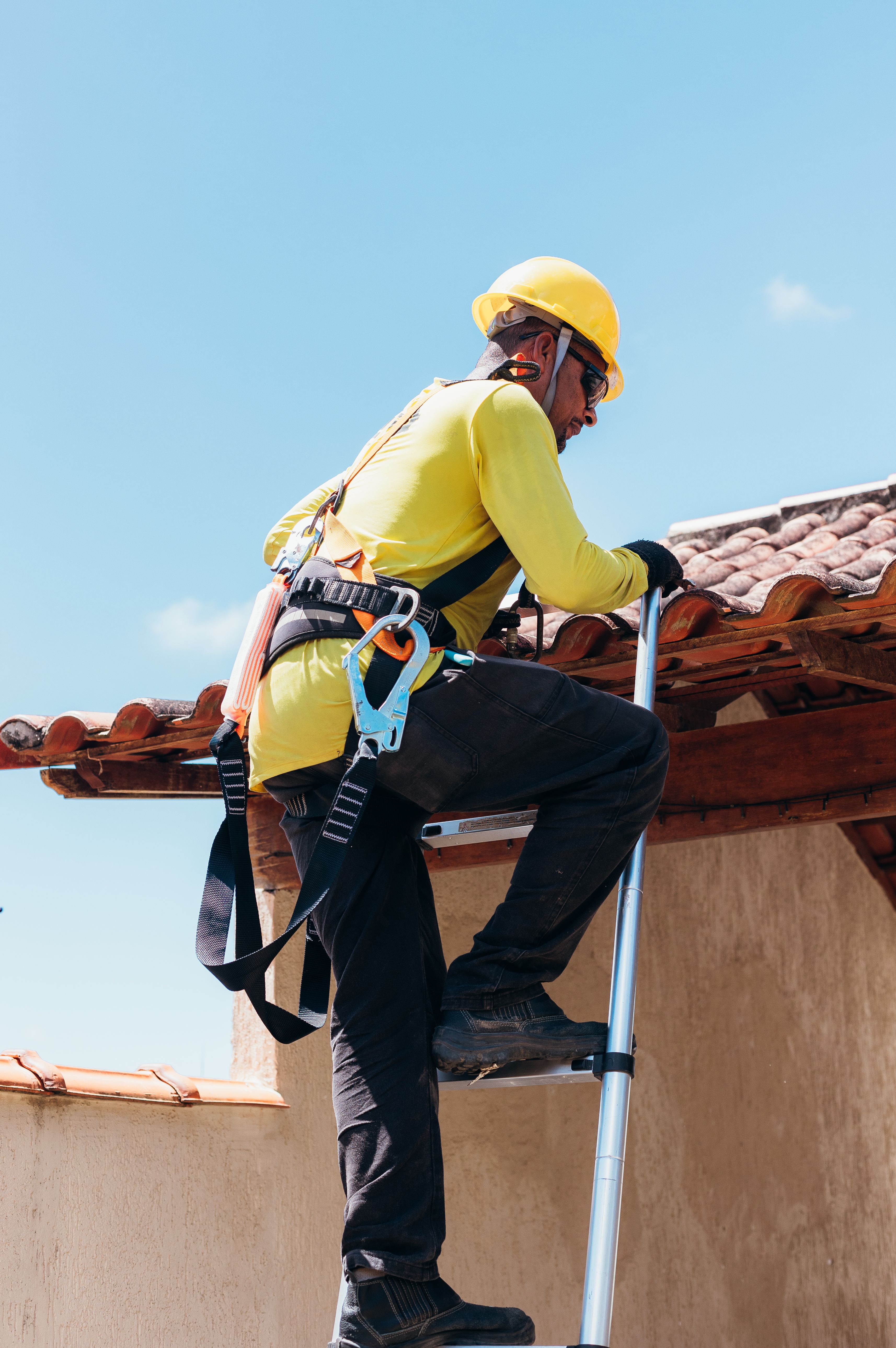
Height-related work is dangerous because once a person loses balance or footing, there may be very little time to recover. Falls can happen because:
the ladder slips or tips
the worker overreaches
the surface below is uneven or slippery
the ladder is damaged or unsuitable
the employee carries tools or stock while climbing
the worker stands too high on the ladder
the person uses one hand to work and loses stability
wind, weather, poor lighting, or clutter make the task more difficult
The injury may not only come from the fall itself. The person may land on sharp tools, electrical equipment, shelving, counters, concrete floors, or machinery. In some environments, a fall can also expose the person to electrical hazards, traffic movement, hot surfaces, or falling objects.
Common Working-at-Height Tasks in Small Businesses
Many small business owners do not think of themselves as “working at height businesses,” yet they still carry out height-related tasks regularly.
Retail businesses
retrieving stock from high shelving
hanging promotional signs
changing light bulbs
decorating display areas
cleaning high surfaces
Technical and installation businesses
installing cameras, alarms, intercoms, and cabling
working near ceilings or roof spaces
mounting brackets or equipment on walls
accessing elevated service points at client premises
Hospitality, food, and catering businesses
cleaning high extraction areas or signage
changing lights
accessing top shelves in storerooms
hanging décor or maintenance items
Cleaning businesses
cleaning high windows, ledges, or fittings
reaching upper shelves or vents
working on stairwells or elevated interior areas
Offices and admin environments
retrieving archive boxes
changing décor or signage
adjusting high blinds or fittings
accessing storeroom shelves
Common Causes of Ladder and Height-Related Accidents
Understanding how accidents happen helps small businesses prevent them. Common causes include the following.
1. Using the wrong equipment for the task
A person may use:
a chair instead of a step ladder
a plastic crate instead of proper access equipment
a short ladder that encourages overreaching
a damaged or unstable ladder
a ladder where a mobile platform or different method would have been safer
2. Poor ladder positioning
A ladder may be placed:
on uneven ground
on a slippery surface
in front of a doorway without control
too steep or too shallow
too far from the work area, causing overreaching
in a cluttered or narrow space
3. Overreaching from the ladder
One of the most common causes of falls is reaching too far to the side instead of climbing down and repositioning the ladder. When the person’s centre of balance moves outside the ladder rails, the ladder can tip or the person can lose balance.
4. Carrying items while climbing
Climbing with tools, stock, boxes, or equipment in the hands reduces grip and balance. It also increases the chance of dropping items onto people below.
5. Standing too high on the ladder
Workers sometimes stand on the top step of a step ladder or too close to the top of a straight ladder. This reduces stability and increases the chance of falling.
6. Using damaged ladders
Bent rails, loose steps, cracked feet, missing anti-slip components, damaged hinges, or general wear can make a ladder unsafe.
7. Poor training and rushed work
Employees may never have been shown how to inspect a ladder, set it up safely, or decide whether the task should be done from a ladder at all. Time pressure also leads to shortcuts and unsafe decisions.
When a Ladder Is and Is Not the Right Choice
A ladder is not automatically the best option for every task at height. It may be suitable for short-duration, light-duty tasks where:
the job can be done quickly
the worker can maintain stability
the ladder can be placed securely
the task does not require heavy tools, strong force, or awkward body movement
there is no safer reasonably practical alternative needed for the level of risk
A ladder may not be the best choice when:
the task will take a long time
the employee must work with both hands for an extended period
heavy tools, equipment, or materials are involved
the worker needs to reach far sideways
the surface is unstable
the work area is very high or difficult to access
the task is close to live electrical hazards
repeated climbing is required
a platform, scaffold, or other safer method is more appropriate
This is an important principle for small business owners: the goal is not simply to “use a ladder carefully.” The goal is to choose the safest reasonable access method for the task.
Basic Ladder Safety Rules for Small Businesses
1. Use the correct ladder for the job
The ladder should be suitable for the type of task, the height required, and the working environment. A household stool or decorative step ladder is not the same as proper workplace access equipment.
2. Inspect the ladder before use
Before using a ladder, check for:
cracks or bent rails
loose or damaged rungs or steps
damaged feet or anti-slip pads
loose hinges on step ladders
missing parts
signs that the ladder is unstable or worn
If the ladder is damaged, it should be removed from use.
3. Place the ladder on a stable surface
The ladder should be set up on firm, level ground wherever possible. Avoid slippery, uneven, soft, or unstable surfaces. If the ground is not safe, the ladder setup is already unsafe.
4. Position the ladder properly
A straight ladder should be set at a safe angle and secured where necessary. Step ladders should be fully opened and locked into position according to their design. They should not be used half-open or in a way the manufacturer did not intend.
5. Keep three points of contact where possible
This usually means two feet and one hand, or two hands and one foot, in contact with the ladder while climbing or descending.
6. Do not carry loads in your hands while climbing
Use a tool belt, hoist, hand line, or have tools passed up safely if appropriate. Carrying items while climbing increases fall risk.
7. Do not overreach
Keep your body centred between the ladder rails as much as possible. If the task is not comfortably reachable, climb down and reposition the ladder.
8. Do not stand on the top steps unless the ladder is designed for it and the manufacturer’s guidance allows it
Standing too high reduces balance and stability.
9. Keep the area around the ladder safe
The area below and around the ladder should be clear of clutter, traffic, and other people where possible. If the ladder is near a doorway, the door should be controlled so it cannot be opened into the ladder.
10. Never use makeshift height access equipment
Chairs, desks, boxes, buckets, crates, shelving, and stacked items are not safe substitutes for ladders or step ladders.
Step Ladder Safety
Step ladders are very common in small businesses because they are convenient and easy to store. However, they still need to be used properly.
Good step ladder practice includes:
opening the ladder fully
locking spreaders or braces properly
keeping both feet on the steps
not leaning far to one side
not using the top cap or top step as a standing point unless specifically designed for it
not moving the ladder while someone is on it
checking that the floor is stable and dry
Step ladders are especially useful for short indoor tasks, but they are not risk-free just because they feel smaller or more familiar.
Working at Height Near Electrical Hazards
If the task involves electrical work, overhead cables, light fittings, powered signage, or any live electrical source, the risk becomes more serious. Small businesses should be especially cautious about:
using metal ladders near electrical hazards
changing fittings without isolating power where appropriate
working in damp areas with electrical equipment
assuming a quick task is safe without planning it properly
Where electrical exposure is part of the task, the business may need a competent or qualified person to do the work safely.
Housekeeping and Height Safety
General housekeeping affects ladder safety more than many people realise. A ladder placed in a cluttered storeroom, on packaging waste, near loose cables, or in a wet area is already at greater risk of slipping or being knocked.
Good housekeeping supports height safety by:
keeping access routes clear
reducing trip hazards around the ladder base
making it easier to place the ladder correctly
reducing the chance of dropped objects hitting items or people below
Training Employees on Ladder Safety
Employees who use ladders or work at height should receive practical instruction on:
choosing the right ladder for the task
checking the ladder before use
setting it up safely
recognising when the surface or environment is unsuitable
maintaining three points of contact
avoiding overreaching
controlling the area below
reporting damaged ladders
knowing when the task should not be done from a ladder
Training should also make it clear that speed does not justify unsafe shortcuts.
Common Mistakes Small Businesses Make
1. Letting staff use chairs, crates, or shelves to reach high places
This is one of the most common and avoidable causes of falls.
2. Keeping old or damaged ladders because “they still work”
A ladder does not need to break completely before it becomes dangerous.
3. Treating short tasks as harmless
Many serious falls happen during quick jobs such as changing a bulb or reaching stock.
4. Expecting workers to carry tools or stock while climbing
This increases the chance of both falls and dropped objects.
5. Using ladders for tasks that require a more stable platform
If the work involves long duration, awkward posture, or heavy equipment, a ladder may not be suitable.
6. Ignoring the area below the work
Even if the worker stays safe, falling tools or stock can injure someone else.
Practical Examples
Example 1: Retail storeroom
A shop assistant uses a chair to reach stock on a high shelf because the step ladder is stored in another room. This is a clear unsafe shortcut. The business should provide accessible step ladders and enforce their use.
Example 2: CCTV installation team
A technician uses a ladder to mount a camera near a ceiling corner. If the technician must drill overhead, hold tools, and work for an extended time while reaching sideways, the business should assess whether a more stable access platform would be safer.
Example 3: Restaurant maintenance
An employee climbs a ladder to change a light fitting above a food preparation area. The task should consider electrical isolation, ladder stability, exclusion of people below, and whether the work is being done by someone competent to perform it safely.
Final Thoughts
Ladder safety and working at height are often underestimated in small businesses because the tasks feel ordinary and familiar. Fetching stock, changing a sign, cleaning a high surface, installing a camera, or replacing a light fitting may seem like quick jobs, but they can still lead to serious injury if the wrong equipment is used, the ladder is unstable, the worker overreaches, or the task should never have been done from a ladder in the first place.
For South African small business owners, managing height safety begins with changing the mindset that “it will only take a minute” makes a task safe. It does not. The safer approach is to assess the task properly, choose the right access equipment, inspect ladders before use, set them up on stable ground, prevent unsafe shortcuts, and train employees to recognise when a ladder is not the right solution. A short task done unsafely can still have life-changing consequences.
The aim is not to make simple access tasks impossible. It is to make them controlled, planned, and much safer. When small businesses take ladder use seriously, maintain proper access equipment, and stop the habit of standing on chairs or overreaching from unstable ladders, they reduce one of the most serious injury risks in the workplace.
In the next article, we will look at workplace chemical safety, including cleaning chemicals, solvents, storage, labelling, safe handling, and what small businesses need to know about controlling chemical hazards in everyday operations.
Related Articles in the Occupational Health and Safety Series
Phase 1: Foundation and Legal Basics
OHS for Small Businesses - An Overview
OHS Act: What Every Small Business Needs to Know
How to Do a Health and Safety Risk Assessment
Creating a Simple OHS Policy and Assigning Responsibilities
Workplace Safety Training and Induction for Employees
First Aid Requirements and Emergency Preparedness
Personal Protective Equipment (PPE)
Incident Reporting and Investigating Workplace Accidents
Workplace Inspections and Safety Checklists
Phase 2: Practical Health and Safety Topics
Manual Handling and Lifting Safety
Electrical Safety in the Workplace
Workplace Ergonomics for Office Employees
Ladder Safety and Working at Height
Chemical Safety in the Workplace
Managing Contractors, Visitors, and Customers On Site
Vehicle, Driving, and Delivery Safety
Workplace Violence, Aggression, and Conflict
Smoking, Vaping, and Substance Use in the Workplace
Young Workers, Temporary Staff, and Vulnerable Employees
Heat, Sun, and Outdoor Work Safety
Rain, Storms, and Severe Weather Safety
Working in Clients' Homes and Customer Premises
AI Disclaimer
AI Tools were used to assist with research. Remember to always cross-check everything that you read.


