OHS for Small Businesses in South Africa: An Overview
Article #1 of #25 in the Occupational Health and Safety Series
Phase 1: Foundation and Legal Basics
Introduction
Running a small business comes with many responsibilities. Most owners focus on sales, customers, staff, cash flow, stock, and daily operations. These are all important, but there is another responsibility that should never be ignored: occupational health and safety.
Occupational Health and Safety, often shortened to OHS, is about creating a workplace where employees, customers, contractors, and visitors are protected from harm as far as reasonably possible. It includes preventing injuries, reducing health risks, making sure the workplace is safe, and putting systems in place so that people know how to work safely.
Some small business owners assume health and safety only applies to large factories, mines, or construction sites. That is not true. Health and safety responsibilities apply to almost every business, even if the business is small and even if the work seems low-risk. A shop, office, salon, workshop, plumbing business, catering company, electrical contractor, security installer, and repair business all have health and safety duties. The risks may differ from one business to another, but the responsibility is still there.
In South Africa, occupational health and safety is not just good practice. It is also a legal responsibility. If an employee is injured because a business ignored obvious hazards, failed to train staff, or did not put basic safety controls in place, the consequences can be serious. A worker may be hurt, the business may lose money, operations may be disrupted, and the owner may face legal and compliance problems.
The good news is that health and safety does not have to be complicated. A small business does not need to become a legal expert to improve safety. What it does need is a clear understanding of its basic responsibilities, the key laws that apply, and the minimum systems that should be in place.
This overview article will introduce the core ideas behind occupational health and safety for South African small businesses. We will look at what OHS means, why it matters, the main laws involved, the role of key government bodies, the employer’s general duty, and the minimum requirements a small business should have in place to be compliant. This article will also prepare the ground for the rest of the series, where we will unpack each of these areas in more detail.
What Occupational Health and Safety Means
Occupational Health and Safety is the system a business uses to protect people from harm in the workplace. The word occupational refers to work or employment. Health refers to the physical and sometimes mental well-being of employees in relation to their work. Safety refers to preventing accidents, injuries, and dangerous situations.
In practical terms, occupational health and safety includes things such as:
identifying hazards in the workplace
reducing the risk of injuries and illness
training employees to work safely
making sure equipment and tools are safe to use
providing first aid equipment and emergency arrangements
preventing fires and electrical accidents
managing chemicals and dangerous substances safely
keeping the workplace clean and organised
giving employees the correct protective equipment where needed
making sure incidents are reported and investigated
Health and safety is not only about reacting when something goes wrong. It is mainly about prevention. The goal is to identify problems before somebody gets hurt and then put sensible controls in place.
For example, a catering business may need to think about burns, knife injuries, slips on wet floors, gas safety, and food-related cleaning chemicals. A plumbing business may need to think about ladders, electrical tools, lifting heavy materials, and working at customer premises. A beauty salon may need to manage electrical equipment, chemical products, hygiene, and slips caused by wet floors. An office may seem safer than a workshop, but it can still have electrical risks, fire risks, poor housekeeping, blocked walkways, and emergency preparedness issues.
The details will vary from one workplace to another, but the principle stays the same: a business must look at its own activities, identify what could cause harm, and take reasonable steps to prevent that harm.
Why Occupational Health and Safety Matters in a Small Business
Some business owners see health and safety as just another compliance task. In reality, it is much more than that. Good health and safety practices protect people, protect the business, and often improve the way the business operates.
1. It protects employees and other people in the workplace
The most important reason for taking health and safety seriously is simple: people can get hurt if safety is ignored. A staff member can fall because of poor housekeeping. A worker can be shocked by faulty electrical equipment. A technician can fall from a ladder. A kitchen worker can be burned by hot oil. A cleaner can be harmed by chemicals that were not stored properly. These are not rare or unusual problems. They are common workplace risks.
When a business takes health and safety seriously, it reduces the chance of these incidents happening.
2. It helps the business meet its legal duties
South African employers have legal duties under health and safety law. Even a small business has a responsibility to provide and maintain, as far as reasonably practicable, a working environment that is safe and without risk to the health of employees. Ignoring this responsibility can lead to inspections, compliance notices, penalties, legal disputes, and serious business disruption.
3. It reduces costs and business disruption
Workplace injuries and incidents cost money. An injured employee may be absent from work. A damaged machine may stop production. A fire or accident can interrupt operations. Management time may be spent dealing with an incident instead of growing the business. In serious cases, a business may lose customers or suffer damage to its reputation.
Preventing incidents is usually far cheaper than dealing with the consequences of an accident.
4. It builds a more professional and reliable business
A business that manages health and safety well often looks more organised and trustworthy. Staff understand procedures. Work areas are cleaner and safer. Equipment is maintained properly. Customers and contractors can see that the business takes responsibility seriously. This can improve confidence in the business, especially where staff work on client sites or where customers visit the premises.
5. It supports productivity and staff morale
Employees work better when they feel safe, informed, and properly equipped. They are also more likely to report hazards and cooperate with management if they can see that safety is treated as a genuine priority rather than an afterthought.
The Main Laws That Small Business Owners Should Know
Small business owners do not need to become lawyers, but they do need to know the basic legal framework. In South Africa, two of the most important legal areas in this space are:
the Occupational Health and Safety Act 85 of 1993
COIDA, which is the Compensation for Occupational Injuries and Diseases Act 130 of 1993
These two laws do different things, but both are important.
The Occupational Health and Safety Act 85 of 1993
The Occupational Health and Safety Act, often called the OHS Act, is one of the main laws that regulates workplace health and safety in South Africa. Its purpose is to protect the health and safety of people at work and also to protect other people who may be affected by workplace activities.
The Act places duties on employers, employees, and in some cases other parties. For a small business owner, the most important point is that the business must provide and maintain a working environment that is, as far as reasonably practicable, safe and without risk to the health of employees.
This does not mean that every workplace must be risk-free in an absolute sense. It means the employer must take reasonable and practical steps to identify hazards, reduce risks, provide information and training, maintain equipment, and put sensible safety controls in place.
The OHS Act is supported by regulations and standards that may apply to specific topics such as hazardous chemical substances, electrical installations, driven machinery, construction work, and other specialist areas. Some of these may be very relevant to a small business depending on the type of work it does.
COIDA: Compensation for Occupational Injuries and Diseases Act
The second major law small business owners should know is COIDA. This law deals with compensation when an employee is injured, disabled, or becomes ill because of work.
COIDA is not mainly about preventing accidents. Its purpose is to create a system through which employees can be compensated for workplace injuries and diseases, subject to the rules of the Act. In practice, this means employers usually need to register with the Compensation Fund if the law applies to them, pay the required assessments, and follow the correct reporting process if an employee is injured on duty.
A business should never think of COIDA as a replacement for safety. It is not. COIDA becomes relevant after something has already gone wrong. Good health and safety practices are still needed to prevent injuries in the first place.
Key Government Bodies and Compliance Entities
Understanding occupational health and safety also means understanding who the main role players are. Small business owners do not need to know every department and process in detail, but they should know which bodies are most relevant to them.
The Department of Employment and Labour
The Department of Employment and Labour plays a central role in labour-related compliance in South Africa, including occupational health and safety. Labour inspectors may inspect workplaces to check whether employers are complying with relevant legal duties. Depending on the circumstances, an inspector may look at documents, ask questions, inspect the premises, and identify non-compliance issues.
If a workplace has serious health and safety problems, an inspector may require corrective action. This is one reason why small businesses should not wait until an inspection happens before taking safety seriously.
The Compensation Fund
The Compensation Fund is the system linked to COIDA. Employers that fall under the Act generally need to register and stay compliant with their obligations. If an employee is injured on duty or contracts an occupational disease, the Compensation Fund process may become relevant for reporting and compensation purposes.
For small business owners, this means workplace injuries are not only a health and safety issue. They are also an administrative and legal issue. Good records, prompt reporting, and correct registration matter.
Health and Safety Representatives and Other Role Players
Depending on the size and nature of a business, there may also be a need for health and safety representatives, supervisors, first aiders, fire marshals, or trained staff members who assist with specific responsibilities. Not every small business will need the same structure, but every business should think carefully about who is responsible for what.
In a very small business, the owner may personally handle many of the health and safety responsibilities. In a larger small business, the owner may need to appoint supervisors or responsible persons to help manage inspections, training, incident reporting, emergency arrangements, or first aid.
The Employer’s General Duty: The Core Legal Responsibility
If there is one principle every small business owner should remember, it is this: the employer has a general duty to provide and maintain a working environment that is safe and without risk to the health of employees, as far as reasonably practicable.
This duty sits at the heart of occupational health and safety compliance. It means an employer cannot simply wait for an accident to happen and then react. The employer must actively think about the risks in the workplace and take reasonable steps to control them.
In practical terms, this general duty may include actions such as:
keeping the workplace, machinery, and equipment in a safe condition
identifying hazards and assessing risks
training employees to do their work safely
making sure employees understand workplace rules and emergency procedures
providing personal protective equipment where needed
controlling exposure to hazardous chemicals or unsafe substances
keeping exits clear and maintaining emergency arrangements
investigating incidents and correcting problems
making sure contractors or visitors are not exposed to unnecessary danger
maintaining basic records, inspections, and compliance systems
The phrase “as far as reasonably practicable” is important. It recognises that different businesses face different risks and have different work environments. A small office does not need the same controls as a construction site. A beauty salon does not need the same systems as a welding workshop. However, each business still has a duty to assess its own risks honestly and manage them properly.
A small business cannot avoid responsibility by saying, “We are too small,” or “Nobody has ever been injured before,” or “We did not know the law.” If there are obvious risks and the business ignores them, that can become a serious problem.
Minimum Occupational Health and Safety Requirements for a Small Business
The exact compliance requirements for a business will depend on the type of work it does, the hazards involved, and sometimes the number of employees. A low-risk office will not have the same requirements as a construction contractor, workshop, kitchen, or factory. However, there are certain minimum health and safety foundations that almost every small business should have in place.
Below is a practical starting point for small business owners. These are not the only possible legal requirements, but they are some of the most important basic steps for building a compliant and safer workplace.
1. A Basic Health and Safety Risk Assessment
A business cannot manage safety properly if it does not first understand its risks. A risk assessment is the process of looking at the workplace, identifying hazards, deciding who could be harmed, and evaluating how serious the risks are. Once the risks are known, the business can decide what controls are needed.
This is one of the most important starting points in any health and safety system because it affects everything else. If you do not know the main risks in your business, you cannot train staff properly, choose the right protective equipment, prepare for emergencies, or fix the right problems first.
For a small business, a basic risk assessment does not need to be overcomplicated, but it should be thoughtful and relevant to the actual work being done. It should cover the real activities of the business, such as using ladders, handling chemicals, operating tools, preparing food, driving to client sites, or storing stock.
2. A Health and Safety Policy or Clear Safety Rules
A business needs a clear statement of how it approaches health and safety. In some businesses this may take the form of a formal health and safety policy. In very small businesses, it may begin as a simpler written set of safety rules and responsibilities, but it should still be documented and communicated.
The purpose of a policy is to show that health and safety is taken seriously, to explain who is responsible for what, and to set out the business’s commitment to safe working practices. It also gives staff a reference point for what is expected.
A policy or safety document should not be copied blindly from the internet and filed away without thought. It should match the actual risks, activities, and structure of the business.
3. Employee Health and Safety Training
Employees need to know how to work safely. This sounds obvious, but it is often one of the first things to be neglected in small businesses. A business may buy equipment, create rules, or even identify hazards, but if employees are not trained properly, the risks remain.
Training should include general workplace safety rules, emergency procedures, and the specific risks linked to the employee’s job. A technician who uses ladders and power tools needs different training from an office administrator. A kitchen employee needs different training from a receptionist.
Training does not always need to be complicated or expensive, but it does need to be relevant, understandable, and repeated when necessary. It is also wise to keep records of training provided.
4. Safe Tools, Equipment, and Work Areas
A business should make sure that tools, machinery, electrical equipment, and work areas are kept in a safe condition. Faulty tools, damaged extension leads, broken ladders, poor storage, blocked walkways, and unsafe machinery are all common causes of workplace incidents.
This means equipment should be checked, maintained, repaired when necessary, and taken out of use if it is unsafe. It also means work areas should be organised properly. A cluttered workplace is not just untidy. It can create trip hazards, fire hazards, and obstacles during emergencies.
A small business does not need a perfect workplace to be compliant, but it should show that it is taking reasonable steps to maintain a safe working environment.
5. Emergency Preparedness, First Aid, and Fire Safety
Even a well-managed workplace can still experience an emergency. A small business should therefore be prepared for situations such as injuries, medical incidents, fires, and evacuations.
At a minimum, this usually means thinking about questions such as:
Do we have a stocked first aid box?
Do employees know who to contact in an emergency?
Are emergency numbers available?
Are fire extinguishers available where appropriate?
Are exits clear and accessible?
Do staff know what to do if there is a fire or serious incident?
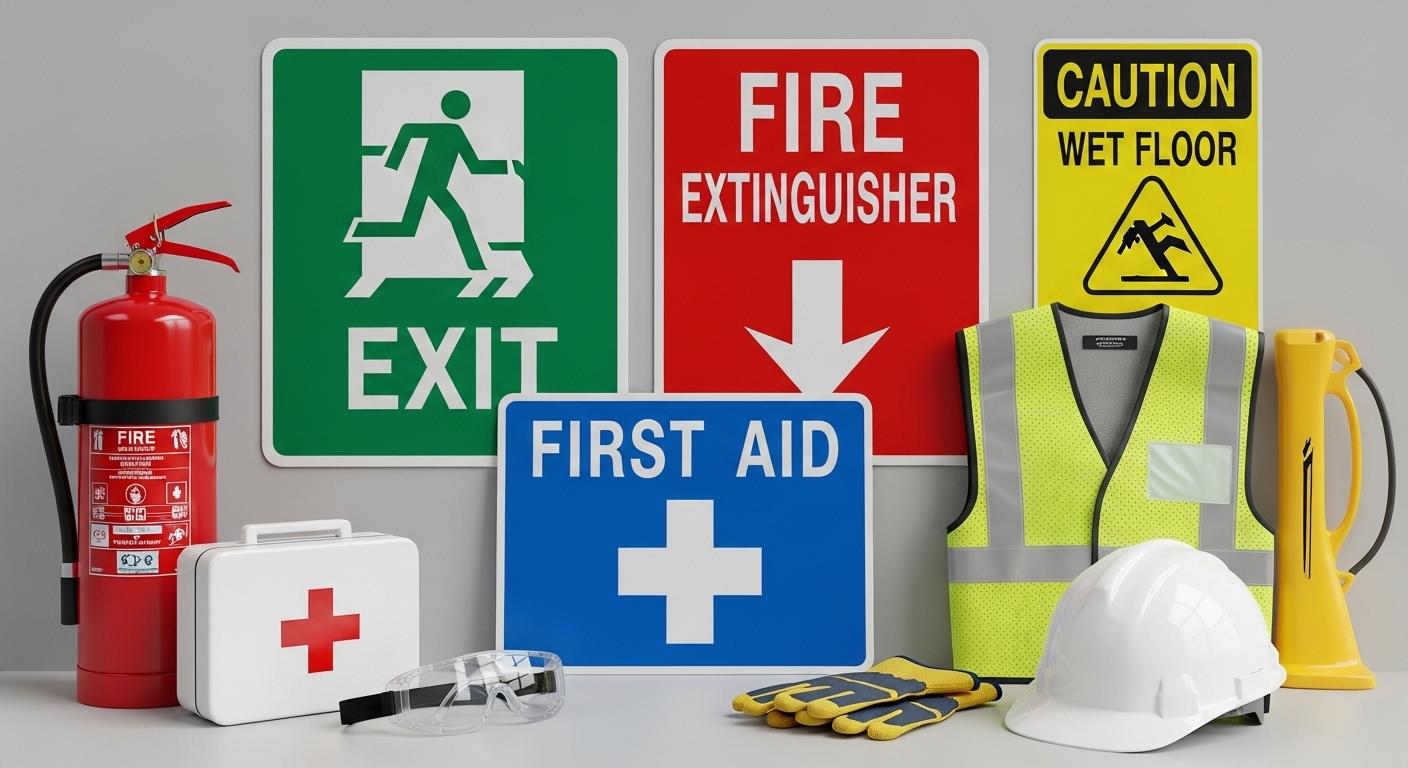
Emergency planning does not need to be complicated, but it does need to be practical. In an emergency, confusion wastes time. Staff should know what to do and where to go.
6. Incident Reporting and Recordkeeping
If someone is injured, if a near miss occurs, or if a dangerous situation is discovered, the business should have a way to record it and respond to it. Incident reporting helps the business learn from mistakes, correct hazards, and show that it takes health and safety seriously.
Recordkeeping also matters because if there is an inspection, a compensation claim, or a dispute after an incident, the business may need proof of what happened, what training was given, what action was taken, and what safety systems were already in place.
A small business does not need endless paperwork, but it should have basic records for important matters such as incidents, training, inspections, and where relevant, equipment checks or first aid treatment.
7. Appropriate Personal Protective Equipment Where Needed
Not every business needs extensive personal protective equipment, but where there are risks that require it, the business should provide suitable PPE and make sure it is used correctly. Examples may include gloves, eye protection, hearing protection, masks, safety footwear, hard hats, or protective clothing.
PPE is not the first or only safety control. It should be used together with other measures such as training, safe work procedures, and hazard control. However, if the job involves a risk that requires PPE and the employer fails to provide it or enforce its use, that can be a serious compliance problem.
The key is to match the PPE to the actual risk. Giving employees PPE that is not suitable for the work, or giving it to them without training, is not enough.
8. Compliance with COIDA and Injury-on-Duty Responsibilities
If the business falls under COIDA, it should make sure it is registered where required and that it understands the basic reporting process for workplace injuries. Too many small businesses only discover their COIDA obligations after an employee has already been injured.
A business should know whether it needs to register, what information it must keep, and what steps must be followed if someone is injured on duty. This is part of responsible business management, not just administration.
9. Clear Responsibility for Health and Safety
One of the simplest but most important compliance steps is making sure that someone is actually responsible for health and safety tasks. In a very small business, that may be the owner. In a growing business, different tasks may be assigned to supervisors, office managers, or appointed staff members.
If nobody is clearly responsible for inspections, training, first aid checks, incident reporting, or follow-up actions, these tasks are often forgotten. A business should therefore decide who will handle which safety responsibilities and make sure those people understand what is expected of them.
Compliance Is Not One-Size-Fits-All
It is important to understand that there is no single checklist that covers every business in exactly the same way. A small accounting office, a panel beater, a take-away shop, an electrical contractor, and a beauty salon all have different risk profiles. This means the detail of compliance will differ.
For example:
a food business may need strong hygiene and food-related safety controls
a construction business may face requirements linked to work at heights, site safety, and higher-risk equipment
a workshop may need stricter controls around machinery, welding, chemicals, and eye protection
a business that sends staff to client sites may need to think carefully about contractor safety, travel risks, and working away from the main office
The basic principles remain the same, but the exact controls must fit the nature of the work.
Common Mistakes Small Businesses Make with Health and Safety
Before closing, it is worth looking at a few common mistakes that small businesses make when it comes to occupational health and safety.
Treating safety as something only large businesses need
This is one of the biggest mistakes. Small businesses often assume they are “too small” for formal health and safety responsibilities. In reality, size does not remove the duty to provide a safe workplace.
Waiting until an accident happens
Some businesses only act after an injury, complaint, or inspection. By then, the business is already in a weak position. Health and safety works best when it is preventive, not reactive.
Using generic documents that do not match the business
A copied policy or checklist may look impressive, but if it does not match the actual workplace, it will not help much. Health and safety systems should reflect the real work being done.
Failing to train staff properly
Employees cannot follow rules they do not understand. Training is essential, especially when tasks involve tools, chemicals, machinery, food preparation, driving, or work at heights.
Ignoring housekeeping and simple hazards
Not every serious incident comes from a major machine or complex legal issue. Sometimes it starts with a blocked exit, loose cable, broken step ladder, wet floor, or damaged plug point. Simple hazards matter.
Not keeping basic records
If there is an injury, inspection, or dispute, a business may need to show what it did to manage safety. If there are no records of training, incidents, or inspections, this becomes much harder.
Final Thoughts
Occupational Health and Safety is not only about compliance documents, inspections, or legal rules. At its core, it is about running a responsible business that takes reasonable steps to protect people from harm. For South African small business owners, this means understanding the law, knowing the main risks in the workplace, and putting basic systems in place to manage those risks properly.
A business does not have to do everything at once, and not every business will need the same level of formality. However, every business should have a basic understanding of its health and safety duties and should take practical action to meet them. In many cases, the first steps are simple: identify hazards, train staff, organise the workplace, prepare for emergencies, keep basic records, and make sure responsibility is clearly assigned.
This article has introduced the legal foundation and minimum requirements for occupational health and safety in a small business. In the next few articles, we will expand on these requirements in more detail. We will look more closely at the Occupational Health and Safety Act, risk assessments, safety policies, training, inspections, incident reporting, first aid, fire safety, and other practical systems that small businesses need. We will also explore industry-specific health and safety requirements, including areas such as food businesses and construction, where the risks and compliance expectations can be more specialised..
Related Articles in the Occupational Health and Safety Series
Phase 1: Foundation and Legal Basics
OHS for Small Businesses - An Overview
OHS Act: What Every Small Business Needs to Know
How to Do a Health and Safety Risk Assessment
Creating a Simple OHS Policy and Assigning Responsibilities
Workplace Safety Training and Induction for Employees
First Aid Requirements and Emergency Preparedness
Personal Protective Equipment (PPE)
Incident Reporting and Investigating Workplace Accidents
Workplace Inspections and Safety Checklists
Phase 2: Practical Health and Safety Topics
Manual Handling and Lifting Safety
Electrical Safety in the Workplace
Workplace Ergonomics for Office Employees
Ladder Safety and Working at Height
Chemical Safety in the Workplace
Managing Contractors, Visitors, and Customers On Site
Vehicle, Driving, and Delivery Safety
Workplace Violence, Aggression, and Conflict
Smoking, Vaping, and Substance Use in the Workplace
Young Workers, Temporary Staff, and Vulnerable Employees
Heat, Sun, and Outdoor Work Safety
Rain, Storms, and Severe Weather Safety
Working in Clients' Homes and Customer Premises
AI Disclaimer
AI Tools were used to assist with research. Remember to always cross-check everything that you read.


