
OHS: First Aid Requirements and Emergency Preparedness for Small Businesses
Article #6 of #25 in the Occupational Health and Safety Series
Phase 1: Foundation and Legal Basics
Introduction
No small business owner wants to imagine an employee collapsing at work, a customer being injured on the premises, or a fire breaking out during a normal workday. Yet emergencies happen in every type of workplace, not only in factories, construction sites, and high-risk industries. A person can cut themselves in a kitchen, slip on a wet floor in a retail store, burn their hand in a workshop, suffer an asthma attack in an office, or become injured while loading stock into a delivery vehicle. In those moments, the difference between panic and a more controlled response often comes down to preparation.
This is where first aid and emergency preparedness become essential parts of workplace health and safety. A business may never be able to prevent every incident, but it can prepare for the possibility that someone may be injured or taken ill while at work. It can make sure that the right basic supplies are available, that employees know what to do, that emergency contact details are accessible, and that common workplace emergencies have been thought through before they happen.
For small business owners, this does not mean turning the workplace into a medical facility or creating a huge emergency management department. It means taking sensible, practical steps based on the size of the business, the type of work being done, and the risks that are present. A small office, a retail shop, a workshop, a catering business, and a field-service company will not all need exactly the same arrangements, but each should still have a basic emergency plan and suitable first aid measures in place.
In South Africa, emergency preparedness also connects closely with an employer’s legal duty to provide and maintain a working environment that is safe and without risk to health, as far as reasonably practicable. A business that ignores first aid arrangements, has no idea how to respond to a workplace emergency, or expects employees to improvise in a crisis is taking unnecessary risk.
In this article, we will look at what first aid and emergency preparedness mean in a small business context, why they matter, what a small business should have in place, how to prepare for common emergencies, and how to keep the system practical and appropriate for the workplace.
What Is First Aid in the Workplace?
First aid is the immediate care given to a person who has been injured or becomes ill before professional medical treatment is available, or before the person can be taken to a clinic, doctor, or hospital if needed.
The purpose of first aid is not to replace professional medical care. Instead, it aims to:
preserve life where possible
prevent the condition from becoming worse
provide basic treatment for minor injuries
support the person until trained medical help arrives or they can access further care
In a workplace, first aid can involve simple actions such as:
cleaning and dressing a small cut
helping someone with a burn injury before they receive further treatment
assisting a person who feels faint or unwell
responding to a nosebleed or minor eye injury
giving immediate support while an ambulance is called
keeping an injured person safe and calm until professional help arrives
The exact type of first aid needed will depend on the business and the kinds of incidents that could happen there.
What Does Emergency Preparedness Mean?
Emergency preparedness means planning ahead for situations that could threaten the health and safety of employees, customers, contractors, visitors, or the business itself. It involves thinking about the types of emergencies that could happen, deciding how the business should respond, and making sure employees know what to do.
In a small business, emergency preparedness usually includes:
identifying likely emergencies
creating basic response procedures
making sure emergency exits and escape routes are usable
keeping emergency contact details available
providing first aid equipment and emergency supplies where needed
appointing people to handle first aid or emergency coordination roles where appropriate
training employees on what to do in an emergency
reviewing what went wrong after an incident and improving the response
A business that is prepared for emergencies is usually calmer, faster, and more effective when something goes wrong.
Why First Aid and Emergency Preparedness Matter
Some small business owners assume that emergencies are rare and that “we will figure it out if something happens.” That approach can be dangerous. In an emergency, people often panic, waste time, forget basic steps, or make decisions that make the situation worse. Preparation reduces that risk.
1. Emergencies can happen in any workplace
A small office may seem low risk, but employees or visitors can still suffer medical emergencies, falls, burns from hot drinks, electrical shocks, or fire-related incidents. A retail shop may have slips, cuts, customer injuries, or security-related emergencies. A workshop may have burns, eye injuries, machinery incidents, or chemical exposure. A catering business may face burns, knife injuries, gas issues, or severe slips.
No workplace is completely free from emergency situations.
2. Quick action can reduce the seriousness of an incident
The first few minutes after an injury or medical emergency can be very important. Basic first aid, quick communication, and a calm response can help prevent a situation from becoming worse.
For example:
cooling a burn properly can reduce tissue damage
responding quickly to heavy bleeding can help reduce blood loss
getting a person away from electrical danger and calling for help promptly can save valuable time
evacuating quickly during a fire can prevent further injuries
3. Preparedness reduces panic and confusion
When employees know who to call, where the first aid box is, where the exits are, and what to do in a basic emergency, the response is usually more controlled. That does not remove the stress of the situation, but it reduces confusion and wasted time.
4. It supports legal and safety responsibilities
Employers are expected to take reasonable steps to protect people in the workplace. First aid arrangements and emergency planning form part of that broader duty of care and safety management.
5. It protects employees, customers, and the business
A good emergency response can reduce harm to people, limit damage to the workplace, reduce downtime, and show that the business takes health and safety seriously.
First Aid Requirements: What Should a Small Business Have?
The exact first aid arrangements needed in a small business depend on factors such as:
the number of employees
the nature of the work
the hazards identified in the risk assessment
whether the business is customer-facing
whether employees work alone, travel, or work at client sites
how close the business is to medical services
There is no single one-size-fits-all arrangement that suits every business, but most small businesses should think about the following areas.
1. A suitable first aid box or kit
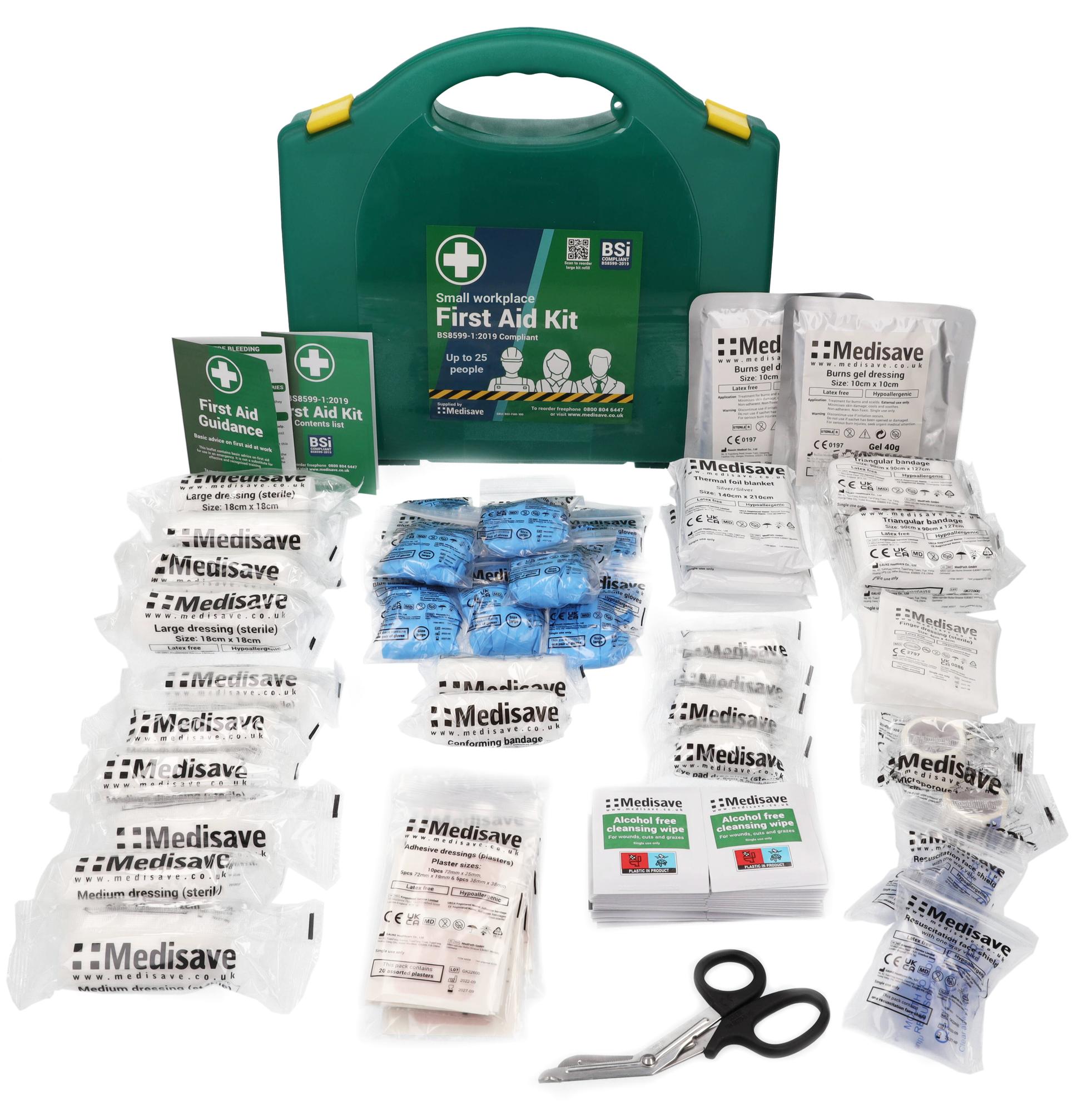
At a basic level, a small business should have a properly stocked first aid box that is suitable for the type of work being done. It should be accessible, clearly identified, and checked regularly so that items are not missing, expired, or damaged.
The contents of the first aid box will depend on the business, but a basic kit may include items such as:
plasters or adhesive dressings
sterile gauze
bandages
adhesive tape
antiseptic wipes where appropriate
gloves
burn dressings or burn treatment items where relevant
eye wash or sterile eye pads where appropriate
scissors
a basic first aid guide or emergency instructions
The important point is not to treat the first aid box as a decorative object hanging on the wall. It should be practical, maintained, and suited to the risks of the workplace.
Different businesses may need different contents
A workshop, kitchen, or field-service business may need more than a basic office first aid box because the likely injuries are different. For example:
a kitchen may need suitable supplies for cuts and burns
a workshop may need items relevant to eye injuries, cuts, or minor crush injuries
a field-service business may need portable kits in company vehicles as well as at the main premises
2. A responsible person to manage first aid arrangements
Even in a small business, someone should be given responsibility for basic first aid arrangements. This may include:
checking the first aid box regularly
replacing used or expired items
knowing where emergency contact numbers are kept
helping to coordinate the response when someone is injured
making sure incidents are reported properly
In some businesses, this may simply be the owner, office administrator, supervisor, or another responsible employee. In others, especially where the work is higher risk or there are more employees, it may be appropriate to appoint a trained first aider.
3. Access to a trained first aider where appropriate
Whether a business needs a formally trained first aider depends on the size of the business and the level of risk. In many workplaces, having at least one person with basic first aid training is a very sensible step, even if the law does not always spell out the same arrangement for every situation.
A trained first aider can be especially useful where:
the business has physical work hazards
employees use tools, machinery, or chemicals
staff work at heights or at customer sites
the workplace is some distance from quick medical help
there are many employees or multiple shifts
the business regularly deals with customers or the public
A small low-risk office may have simpler arrangements than a workshop or food business, but every business should still ask: If someone gets injured or becomes seriously unwell, who will respond in those first few minutes?
4. Emergency contact details that are easy to find
In an emergency, people should not waste time searching for important contact details. The workplace should have clear access to:
ambulance or emergency service numbers
nearby clinic, hospital, or doctor contact details if relevant
key management contact numbers
emergency contacts for employees where appropriate
any site-specific emergency numbers if the business is located in a larger complex, industrial park, or shopping centre
These details should be kept where employees can find them quickly.
5. A way to record injuries and incidents
If someone is injured at work, the incident should be recorded properly. A simple incident record can help the business:
understand what happened
identify whether there is an ongoing hazard
follow up on treatment or medical care
improve safety measures to prevent a repeat incident
For more serious incidents, additional legal reporting duties may apply, which we will cover in a later article in this series.
Common Workplace Emergencies Small Businesses Should Plan For
Emergency planning works best when it is based on realistic scenarios rather than vague ideas. A small business should think about the types of emergencies that could actually happen in its environment.
Below are some of the most common situations.
1. Medical emergencies and sudden illness
Not every emergency is caused by a workplace hazard. An employee, customer, or visitor may suddenly become unwell due to:
chest pain
fainting
difficulty breathing
a seizure
diabetic complications
severe allergic reaction
heat exhaustion
a sudden illness unrelated to work
The business should think about:
who will call for help
who will stay with the person
whether there is a trained first aider
how emergency services will be guided to the correct location
whether staff know not to move someone unnecessarily if a serious injury is suspected
2. Cuts, burns, and minor injuries
These are common in kitchens, workshops, salons, technical businesses, retail spaces, and even offices. The business should know:
where first aid supplies are kept
who can help
when a minor injury can be treated on site and when further medical treatment is needed
how the incident will be recorded
3. Fire
Fire is one of the most important emergencies for any business to consider. Even a small office or shop can experience an electrical fire, kitchen fire, or fire caused by flammable materials, faulty equipment, or unsafe storage.
The business should have clear arrangements for:
raising the alarm
evacuating the building
using fire extinguishers only where appropriate and safe
accounting for employees if possible
contacting emergency services
identifying a safe assembly point
4. Electrical incidents
Businesses that use electrical tools, extension leads, machinery, or technical equipment should think about electric shock, overheating equipment, or electrical fires. Employees should know:
not to touch a person who is still in contact with a live electrical source
how to isolate power if it is safe and they are authorised to do so
when to call emergency services
how to report faulty equipment immediately
5. Gas leaks or chemical incidents
This may be more relevant in kitchens, workshops, salons, cleaning operations, and some technical businesses. Emergency planning should consider:
how to recognise a leak or dangerous spill
whether staff should evacuate the area
who should be contacted
what PPE or emergency controls are available
whether ventilation or isolation procedures are needed
6. Security-related emergencies or violence
Some businesses may need to think about robbery, threatening behaviour, or violence from customers or intruders. This is not relevant in exactly the same way to every workplace, but where it is a realistic risk, it should form part of emergency planning.
7. Vehicle or field-work incidents
Businesses whose employees drive for work or work at client sites should think beyond the main premises. If a technician is injured while working at a customer’s property or if a delivery driver has a road incident, the business should have a plan for:
emergency contact procedures
communication with management
access to first aid supplies in vehicles
reporting and follow-up
Building a Simple Emergency Plan for a Small Business
A small business emergency plan does not need to be long or overly technical, but it should answer a few basic questions clearly.
1. What emergencies are we planning for?
Start with the realistic scenarios identified in the risk assessment. Do not try to prepare for every possible disaster in the world. Focus on the situations that could reasonably affect your business.
2. Who does what in an emergency?
Decide who will:
call emergency services
help evacuate staff or customers if needed
bring the first aid box if appropriate
meet emergency responders at the entrance
inform management
record the incident afterwards
3. Where are the emergency resources?
Employees should know where to find:
first aid boxes
fire extinguishers
emergency exits
assembly points
emergency contact lists
any emergency shut-off points relevant to the workplace, such as electrical isolators or gas shut-offs where applicable
4. How will employees be informed?
Employees should be told what to do in an emergency during induction and refresher training. It is also helpful to display basic emergency instructions where appropriate.
5. How will the plan be reviewed?
After an incident, near miss, or emergency drill, the business should ask:
What worked well?
What caused delays or confusion?
Did employees know what to do?
Were the emergency supplies and contact details available?
What needs to improve?
Practical Emergency Preparedness Tips for Different Types of Small Businesses
Office-based business
Focus on:
fire evacuation procedures
medical emergencies and fainting or illness
electrical safety
first aid box and emergency contacts
keeping exits clear
Retail business
Focus on:
customer and employee injuries
slips and trips
emergency evacuation
cash-area or security-related emergencies where relevant
first aid access during trading hours
Catering or food business
Focus on:
burns and knife injuries
gas and fire emergencies
slips on wet or greasy floors
chemical cleaning products
portable first aid access during off-site events if relevant
Workshop or technical business
Focus on:
cuts, burns, eye injuries, and electrical incidents
fire and equipment emergencies
PPE and first aid supplies for more physical injuries
trained first aiders where appropriate
emergency communication if staff work away from the premises
Field-service or installation business
Focus on:
vehicle first aid kits
communication procedures for staff working alone or off-site
emergency response on client premises
electrical, ladder, and tool-related injuries
escalation procedures to supervisors or managers
Training Employees for First Aid and Emergency Response
Emergency plans only work if employees know about them. Staff should receive practical information on:
where the first aid box is kept
who the first aider or responsible person is
how to report an injury or medical emergency
what to do if there is a fire
where the exits and assembly point are
how to call for help
any specific emergency procedures relevant to their work
This does not mean every employee must become a first aid expert, but everyone should know the basic emergency arrangements of the workplace.
Common Mistakes Small Businesses Make
1. Having a first aid box that nobody checks
A first aid box is of little use if the contents are missing, damaged, or expired.
2. Assuming someone else will know what to do
If no one has been assigned responsibility, emergency response can become confused very quickly.
3. Failing to plan for the most likely emergencies
A business may focus on dramatic rare scenarios while ignoring common issues such as cuts, burns, slips, fainting, or electrical incidents.
4. Not training employees on emergency procedures
A plan that only exists in the owner’s head is not a real emergency plan.
5. Ignoring off-site and vehicle-based work
If employees travel, deliver goods, or work at customer premises, emergency planning should cover those situations too.
6. Treating first aid and emergency planning as separate from health and safety
First aid and emergency response should be linked to the business’s risk assessment, training, reporting, and overall safety management system.
Final Thoughts
First aid and emergency preparedness are not optional extras that only matter in large or dangerous workplaces. They are basic parts of running a responsible small business. Even a relatively low-risk workplace can experience medical emergencies, slips, cuts, burns, electrical problems, or fires, and when those things happen, preparation matters.
For South African small business owners, the goal is not to create a complicated emergency management system. The goal is to think practically about the kinds of incidents that could happen, make sure suitable first aid supplies are available, assign clear responsibilities, keep emergency contacts accessible, and train employees on what to do when something goes wrong. A small amount of planning can make a major difference in the first few minutes of an emergency.
A well-prepared business is usually calmer, more organised, and better able to protect its employees, customers, and operations when faced with an unexpected event. First aid boxes, emergency contacts, evacuation plans, and trained responsible persons may seem like small details during an ordinary workday, but they become very important when someone is hurt or a workplace crisis begins to unfold.
In the next article, we will build on this by looking at fire safety in the workplace, including fire prevention, fire extinguishers, evacuation planning, and practical fire safety measures for South African small businesses.
Related Articles in the Occupational Health and Safety Series
Phase 1: Foundation and Legal Basics
OHS for Small Businesses - An Overview
OHS Act: What Every Small Business Needs to Know
How to Do a Health and Safety Risk Assessment
Creating a Simple OHS Policy and Assigning Responsibilities
Workplace Safety Training and Induction for Employees
First Aid Requirements and Emergency Preparedness
Personal Protective Equipment (PPE)
Incident Reporting and Investigating Workplace Accidents
Workplace Inspections and Safety Checklists
Phase 2: Practical Health and Safety Topics
Manual Handling and Lifting Safety
Electrical Safety in the Workplace
Workplace Ergonomics for Office Employees
Ladder Safety and Working at Height
Chemical Safety in the Workplace
Managing Contractors, Visitors, and Customers On Site
Vehicle, Driving, and Delivery Safety
Workplace Violence, Aggression, and Conflict
Smoking, Vaping, and Substance Use in the Workplace
Young Workers, Temporary Staff, and Vulnerable Employees
Heat, Sun, and Outdoor Work Safety
Rain, Storms, and Severe Weather Safety
Working in Clients' Homes and Customer Premises
AI Disclaimer
AI Tools were used to assist with research. Remember to always cross-check everything that you read.


