
OHS: Heat, Sun, and Outdoor Work Safety: Protecting Employees from Dehydration and Exposure
Article #22 of #25 in the Occupational Health and Safety Series
Phase 2: Practical Health and Safety Topics
Introduction
Many small businesses in South Africa have employees who work outdoors for part of the day or even for most of their working time. These may include construction workers, security guards, installers, technicians, gardeners, cleaners, delivery teams, drivers, warehouse staff working in open yards, farm workers, event teams, and maintenance crews. In some businesses, outdoor work is the core of the operation. In others, employees may spend only part of the day outside, such as travelling to client sites, loading vehicles, doing site inspections, or carrying out repairs. Either way, exposure to heat, direct sun, dehydration, and changing weather conditions can create real health and safety risks if it is not managed properly.
Because heat and sunlight are part of everyday life in South Africa, they are often underestimated. Many people think of them as a discomfort issue rather than a workplace safety issue. An employee may say they are “just hot” or “a bit tired,” while in reality they are becoming dehydrated, physically exhausted, sunburnt, or less able to think clearly and work safely. Heat can reduce concentration, slow reaction times, increase irritability, and make physical work far more demanding. In more serious cases, it can lead to heat exhaustion, collapse, or other medical emergencies. Sun exposure also matters because repeated exposure without protection can cause painful sunburn, skin damage, eye strain, and longer-term health concerns.
Outdoor work risks are not limited to very high summer temperatures. A person can become dehydrated on a warm day even when the temperature does not seem extreme. A worker can be exposed to strong UV rays while standing in direct sun for hours. Someone doing physically demanding work while wearing PPE can overheat faster than expected. A driver or technician may spend long periods in a vehicle without enough water and then continue working outdoors at a customer site. A security guard may be stationed in direct sun with limited shade. A worker on a roof, scaffold, pavement, roadside, open yard, or construction site may face heat from both the sun above and the hot surface around them.
For small business owners, this means outdoor work safety should not be treated as common sense alone. Heat, sun, and dehydration should be included in the business’s health and safety thinking, especially where staff work outdoors regularly, perform physically demanding tasks, wear heavy clothing or PPE, or travel between outdoor sites. The goal is not to make work impossible every time the weather is hot. The goal is to recognise the risk early and take practical steps to reduce it. This includes planning work properly, providing water, encouraging rest and shade, adjusting clothing and PPE where appropriate, watching for signs of heat stress, and making sure employees know when to speak up.
In this article, we will look at the main risks linked to heat, sun, and outdoor work, the types of workers who may be most exposed, and the practical steps small businesses can take to protect employees from dehydration, heat illness, sun exposure, and related outdoor hazards.
Why Heat and Sun Exposure Are Workplace Safety Issues
Heat and sun exposure become workplace safety issues when they affect a person’s health, judgement, concentration, physical ability, or ability to work safely. An employee who is overheated or dehydrated may:
become tired much faster
lose concentration
make mistakes
feel dizzy or weak
react more slowly
struggle with physical tasks
become irritable or confused
be more likely to have an accident
These effects can be dangerous in almost any workplace, but especially where the employee is:
driving
climbing ladders
working at height
lifting or carrying materials
using tools or machinery
handling electricity
working near traffic or moving vehicles
supervising customers or members of the public
wearing heavy PPE or protective clothing
Sun exposure also matters because it can damage the skin and eyes, contribute to fatigue and discomfort, and make a worker less able to continue safely through the day.
Which Small Businesses Should Pay Attention to Outdoor Heat Risk?
Outdoor heat and sun safety are relevant to many industries and not only to construction. Small businesses that should think carefully about these risks include:
construction and building trades
CCTV, electrical, plumbing, and technical installation businesses
security companies with guards at gates, entrances, or outdoor posts
cleaning and maintenance businesses
landscaping and gardening businesses
delivery and logistics businesses
event setup teams
agricultural and farming operations
road, paving, and civil work contractors
retail or warehouse businesses with outdoor loading and yard activity
Even office-based businesses may have drivers, sales staff, or technicians who spend long periods travelling and working outdoors.
Understanding the Main Heat and Outdoor Exposure Risks
Outdoor work can expose employees to several related risks at the same time. These include:
1. Dehydration
When the body loses more fluid than it takes in, the worker may become dehydrated. This can happen gradually during a hot day, especially if the person is physically active, sweating heavily, or not drinking enough water.
2. Heat exhaustion and heat stress
When the body struggles to cope with heat, a worker may develop symptoms such as weakness, dizziness, nausea, headache, heavy sweating, and exhaustion. If ignored, this can become much more serious.
3. Sunburn and skin damage
Employees working in direct sunlight without protection may suffer sunburn, skin irritation, and repeated long-term exposure to UV radiation.
4. Reduced concentration and unsafe decision-making
A worker who is overheated may not think clearly, may rush, or may make poor safety decisions.
5. Fatigue during physical work
Manual work becomes more demanding in hot conditions, especially when lifting, climbing, digging, pushing, or carrying.
6. Heat build-up inside vehicles, cabins, and enclosed workspaces
Drivers and mobile workers may be exposed to heat not only outside, but also in parked vehicles, vans, cabins, guard booths, or poorly ventilated work areas.
What Makes Heat Risk Worse?
Not every employee experiences heat in the same way. Risk can increase when:
the weather is very hot
the employee works in direct sunlight with little shade
the task is physically demanding
the person wears heavy clothing, overalls, helmets, or other PPE
the worker is not drinking enough water
the worker is new to outdoor conditions or not used to the heat
there is little air movement
the work surface reflects or traps heat
the employee is already tired, ill, or recovering from illness
the worker is under pressure to keep working without breaks
A combination of these factors can turn an ordinary outdoor shift into a serious safety risk.
Signs of Dehydration and Heat Stress
Employees and supervisors should know some of the common warning signs that a person may be struggling with heat. These can include:
thirst
headache
dizziness
weakness
tiredness
nausea
muscle cramps
heavy sweating
dry mouth
poor concentration
irritability
light-headedness
unusual confusion or clumsiness
A worker may not always admit they are struggling, especially if they do not want to appear weak or delay the job. That is why supervisors should pay attention to visible signs as well as what employees say.
Why Heat Safety Matters Even More in Physically Demanding Jobs
Outdoor heat becomes more dangerous when employees are already doing physically demanding work such as:
digging
carrying materials
climbing ladders
installing equipment
working on roofs
unloading deliveries
pushing trolleys
standing for long hours in the sun
wearing heavy belts, boots, helmets, or PPE
The body is already working hard to perform the task. Add heat, sweating, sun exposure, and limited rest, and the strain becomes much greater.
Outdoor Work and PPE: A Difficult Combination
In some jobs, employees must wear PPE such as:
hard hats
safety boots
reflective vests
gloves
overalls
safety glasses
respirators or masks
PPE is necessary for protection, but it can also make workers feel hotter and sweat more. This does not mean PPE should be removed casually. It means the employer should recognise the extra strain and manage the work accordingly through breaks, hydration, scheduling, and suitable clothing choices where possible.
Practical Steps to Reduce Heat and Sun Risk
1. Provide access to drinking water
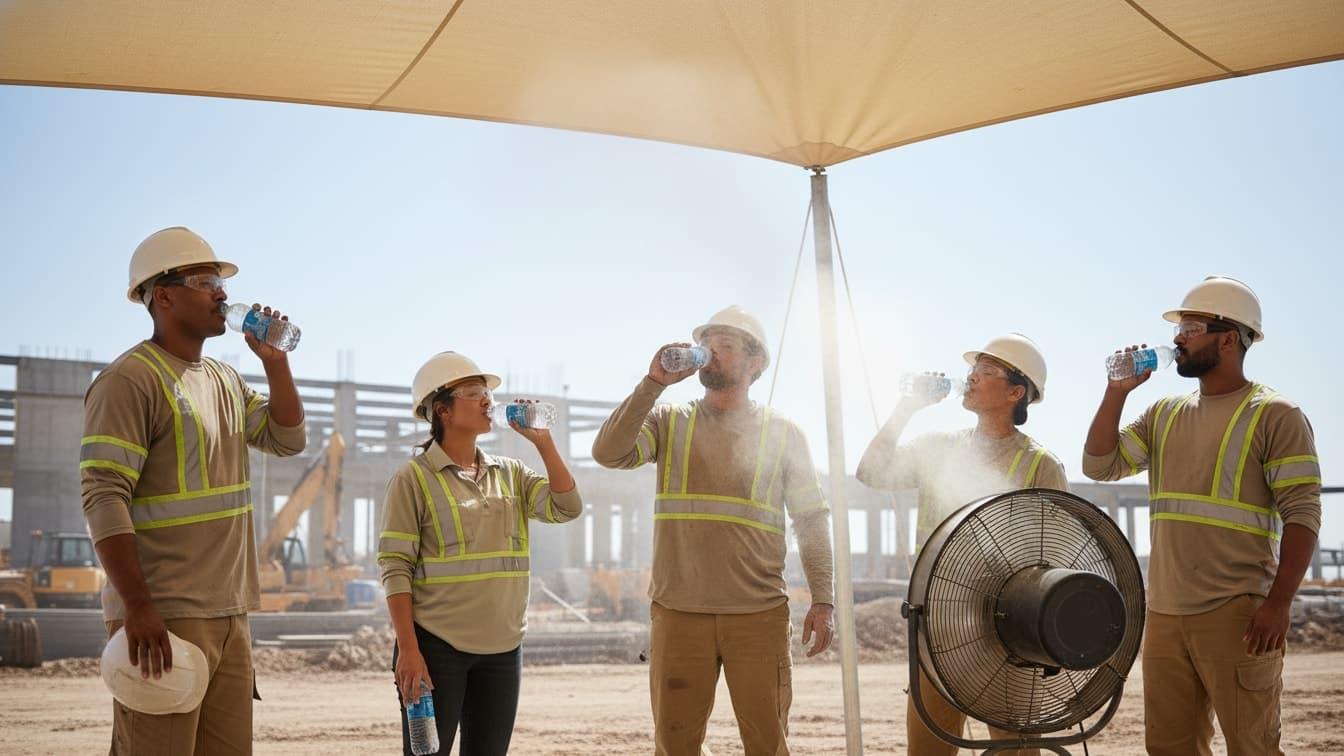
One of the most basic and important controls is making sure employees have regular access to clean drinking water. Workers should not have to depend on buying their own water or waiting until the end of a job. Water should be available where the work is taking place, especially for outdoor teams, delivery staff, and mobile technicians.
2. Encourage regular hydration before workers feel seriously thirsty
Waiting until someone feels very unwell is too late. Employees should be encouraged to drink water regularly during hot work, not only once they feel weak or dizzy.
3. Plan work around the hottest parts of the day where possible
If the business has flexibility, it may help to:
start heavy outdoor work earlier
move strenuous tasks to cooler times of day
use indoor or shaded tasks during peak heat
reduce unnecessary exposure in the hottest period
This may not always be possible, but even small adjustments can make a difference.
4. Provide or identify shaded rest areas
Employees working in the sun need a place where they can cool down during breaks. This may be a shaded area, a canopy, a site office, a vehicle with ventilation, or another suitable rest space.
5. Use appropriate clothing and sun protection
Depending on the work, practical protection may include:
hats or hard hat attachments that provide shade
long sleeves where appropriate
lightweight but protective workwear
sunglasses or eye protection suitable for the task
sunscreen where practical and appropriate
The right solution will depend on the job and the PPE requirements, but sun protection should be considered rather than ignored.
6. Train supervisors and workers to recognise heat-related symptoms
Employees should know the signs of dehydration and heat stress and understand that reporting symptoms early is part of working safely, not a sign of weakness.
7. Watch new workers and workers returning after absence
A person who is not used to outdoor heat or has recently returned after illness or leave may struggle more than expected. They may need closer supervision and a more gradual return to heavy outdoor work.
8. Adjust workloads when conditions are severe
If heat is extreme, the business may need to slow down the pace, add more breaks, rotate staff, or postpone non-urgent outdoor tasks where possible.
Drivers, Technicians, and Mobile Workers Need Attention Too
Heat safety is not only about construction sites and labour-intensive outdoor work. Mobile workers such as technicians, drivers, sales teams, delivery staff, and field service employees may also be at risk because they:
spend long hours in vehicles
travel with limited access to water
work in unfamiliar outdoor locations
move between driving and physically demanding site work
may feel pressure to keep to a tight schedule
A technician who has already spent hours driving in hot weather may arrive at a site tired and dehydrated before the physical work even begins. Businesses should think about the full workday, not only the job at the final location.
Outdoor Work Near Roads, Yards, and Open Sites
Outdoor heat risk often combines with other hazards. For example, a worker in the sun may also be:
working near traffic
climbing ladders
lifting heavy equipment
unloading a vehicle
exposed to dust and glare
working on uneven ground
trying to finish a task quickly before weather changes
Heat can make all of these other hazards more dangerous by reducing focus and physical control.
What Supervisors Should Do If a Worker Shows Heat Stress Symptoms
If an employee appears unwell from heat or dehydration, the situation should be taken seriously. Practical steps may include:
moving the person to a cooler or shaded area
stopping the work activity
giving water if the person is able to drink safely
loosening unnecessary heavy clothing where appropriate
monitoring the person closely
getting first aid or medical assistance if symptoms are severe, worsening, or not improving
Supervisors should not dismiss symptoms as laziness or “just being dramatic.” Heat-related illness can become serious quickly.
Common Mistakes Small Businesses Make
1. Treating heat as discomfort rather than a safety risk
If heat affects concentration, physical ability, or health, it is a safety issue.
2. Expecting employees to manage hydration on their own
Workers may delay drinking water if it is inconvenient or not readily available.
3. Ignoring the effect of PPE and physical workload
A worker in boots, overalls, a hard hat, and direct sun may struggle far more than someone doing light office work.
4. Scheduling heavy outdoor work in peak heat without considering alternatives
Sometimes timing can reduce risk significantly.
5. Assuming only construction workers are at risk
Drivers, guards, technicians, cleaners, gardeners, and delivery teams may also be exposed.
6. Waiting until a worker collapses before taking the issue seriously
Early signs matter and should be acted on.
Practical Examples
Example 1: Security guard at an outdoor gate
A guard stands in direct sun for long periods with little shade and limited access to water. The employer should provide water access, shaded breaks, and a practical plan for heat management during hot days.
Example 2: Technician team doing an outdoor installation
A team installs equipment on an external wall in summer while wearing PPE and carrying tools. The business should plan hydration, breaks, shade, and workload realistically rather than pushing the team through continuous exposure.
Example 3: Delivery driver with multiple stops
A driver makes repeated deliveries in hot weather and lifts stock at each stop. The business should think about vehicle heat, water access, rest, and the combined effect of driving plus manual handling in the sun.
Final Thoughts
Heat, sun, and outdoor work can create serious safety risks for small businesses, especially in South African conditions where many employees work in direct sunlight, hot yards, open sites, vehicles, and customer locations. Dehydration, fatigue, heat stress, sunburn, and reduced concentration can all affect a worker’s ability to perform safely. These risks become even greater when employees are doing physically demanding tasks, wearing PPE, climbing, lifting, driving, or working long hours without enough water, shade, or rest.
For small business owners, the most practical approach is to treat heat and sun exposure as a real workplace hazard rather than a minor discomfort. That means making water available, encouraging regular hydration, planning heavy work more carefully, providing shaded rest opportunities, training employees to recognise early warning signs, and paying attention to mobile workers as well as site-based teams. It also means understanding that outdoor safety is not only about avoiding a medical emergency. It is about keeping employees alert, physically capable, and protected throughout the workday.
A business that manages heat and outdoor work properly protects its people, reduces preventable incidents, and shows employees that their wellbeing matters just as much as productivity. That is a practical and professional part of workplace safety.
In the next article, we will look at rain, storms, and severe weather risks, including slippery conditions, lightning, wind, flooding, outdoor shutdown decisions, and practical ways small businesses can protect employees when the weather changes suddenly.
Related Articles in the Occupational Health and Safety Series
Phase 1: Foundation and Legal Basics
OHS for Small Businesses - An Overview
OHS Act: What Every Small Business Needs to Know
How to Do a Health and Safety Risk Assessment
Creating a Simple OHS Policy and Assigning Responsibilities
Workplace Safety Training and Induction for Employees
First Aid Requirements and Emergency Preparedness
Personal Protective Equipment (PPE)
Incident Reporting and Investigating Workplace Accidents
Workplace Inspections and Safety Checklists
Phase 2: Practical Health and Safety Topics
Manual Handling and Lifting Safety
Electrical Safety in the Workplace
Workplace Ergonomics for Office Employees
Ladder Safety and Working at Height
Chemical Safety in the Workplace
Managing Contractors, Visitors, and Customers On Site
Vehicle, Driving, and Delivery Safety
Workplace Violence, Aggression, and Conflict
Smoking, Vaping, and Substance Use in the Workplace
Young Workers, Temporary Staff, and Vulnerable Employees
Heat, Sun, and Outdoor Work Safety
Rain, Storms, and Severe Weather Safety
Working in Clients' Homes and Customer Premises
AI Disclaimer
AI Tools were used to assist with research. Remember to always cross-check everything that you read.


