Free Business Resources Small Business Owners
These free resources will help you get started, stay organised, make better decisions, and grow your business step by step.
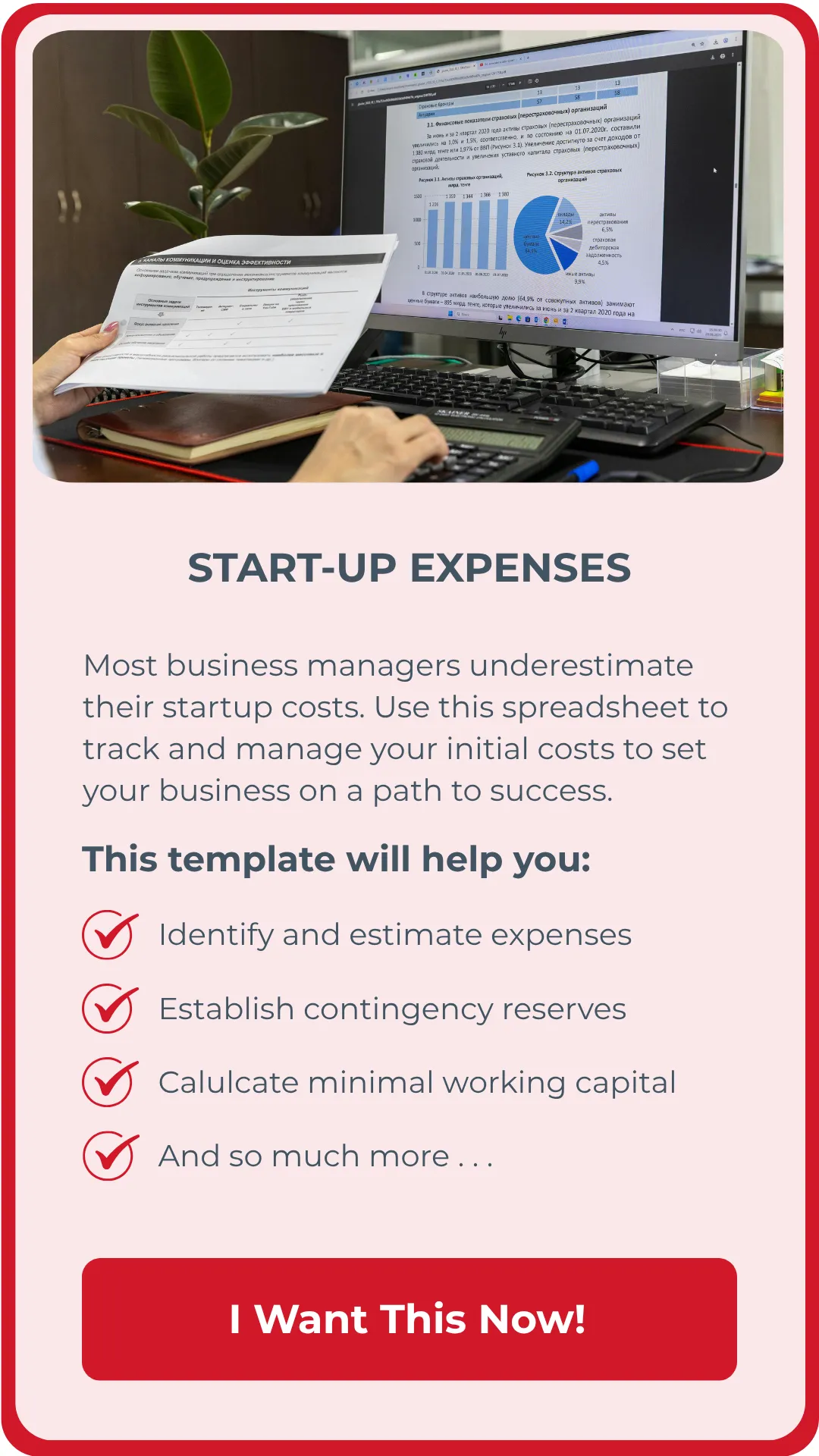
Spreadsheet for Startup Expenses
Effectively track and manage your initial costs to set your business on a path to success. Many business owners start out by underestimating their startup costs and face the risk of running out of funding. Your research and planning needs to be rigorous.
Use this spreadsheet to help you navigate the process and help you focus on the following key areas:
Expenses
Contingencies
Working Capital
Sources
Collateral
The key to accuracy is attention to detail. Don't take any shortcuts as this will only hurt you in the long run. This document will also be helpful if you are planning to apply for a bank loan. Note that the bank will also want some proof of your estimates.
Opening Day Balance Sheet Template
An opening day balance sheet shows the financial balances at the start of a reporting period, or in this case, at the launch of your business.
Here are the key areas covered in this template:
Prepaid Expenses: Insurance, rent, utilities, telecom services, subscriptions
Other Assets: Intangible assets presumed to have economic value, such as patents or trademarks
Current Liabilities: Any debts due within twelve months
Owner's Equity: This is what is left over once you subtract Liabilities from Assets
Once again, accuracy comes with attention to detail. If you do the basic bookkeeping yourself, you should always get a formal approval from a qualified accountant.
Template for a Personal Financial Statement
Every small business owner needs to have a personal financial statement (PFS), which serves as a personal balance sheet, documenting your assets, liabilities, and net worth.
Most financial institutions require a personal financial statement as well when you are applying for any sort of business finance. Landlords may also require a PFS when leasing business premises.
Here are the steps for creating your Personal Financial Statement:
Gather Your Documents: Bank statements, investment accounts, loan documents, receipts from major purchases
Choose a Format: Online template, sheet of paper, or download this template
List Your Assets: Identify and value assets using current market values for investments and real estate.
List Your Liabilities: Include all debts, note remaining balances and interest rates.
Calculate Your Net Worth: Subtract your total liabilities from your total assets to determine your net worth.
Review and Update Regularly: Update it regularly - at least every quarter.
It is critical to be honest and accurate. This wealth assessment is for your own benefit to help you (and lenders) make informed decisions.
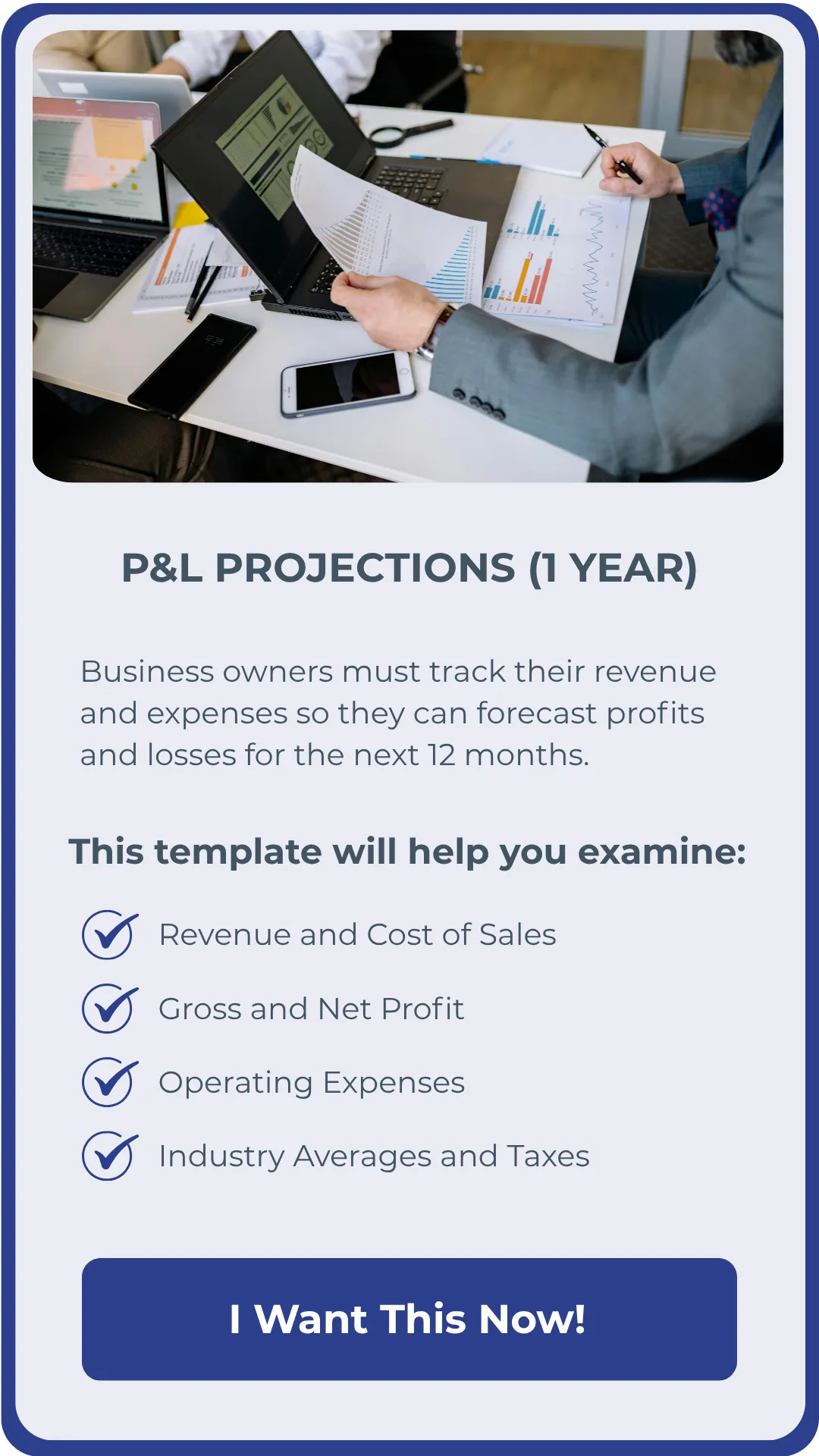
Profit & Loss Projections - 1 Year
Use this worksheet to track your revenue and expenses so that you can forecast your profits and losses for the next twelve months.
The spreadsheet helps you to examine the following:
Revenue
Cost of Sales
Gross and Net Profit
Operating Expenses
Industry Averages
Taxes
Be sure to incorporate these projections into your business plans. It is important that your business plan and your projections align.
Profit & Loss Projections - 3 Years
This worksheet works exactly like the Profit & Loss Projections (1 Year) worksheet, except that it allows you to track revenue and expenses over a 3-Year period.
The spreadsheet helps you to examine the following:
Revenue
Cost of Sales
Gross and Net Profit
Operating Expenses
Industry Averages
Taxes
Be sure to incorporate these projections into your business plans. It is important that your business plan and your projections align.

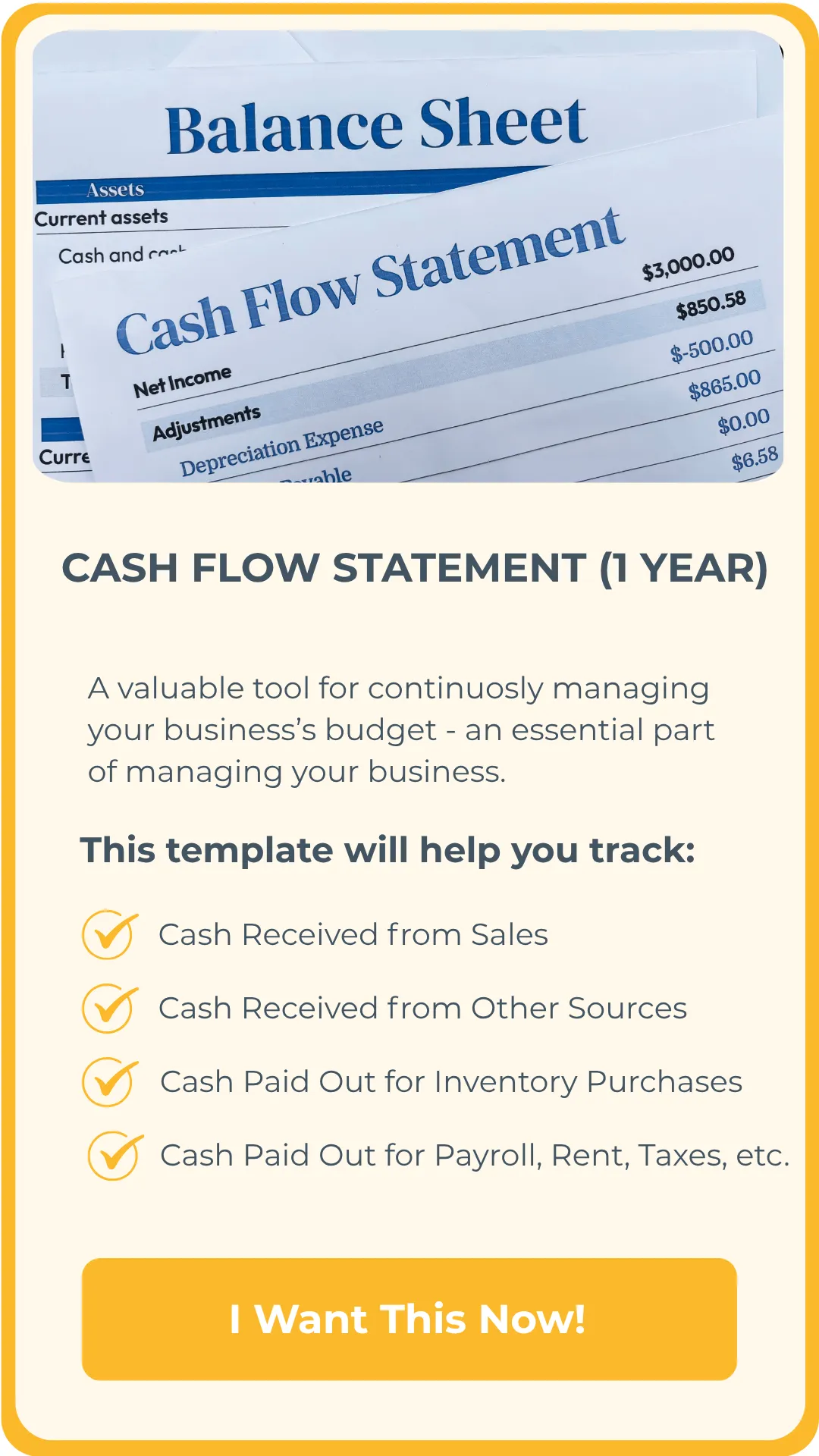
Cash Flow Statement - 1 Year
Along with the Balance Sheet and the Profit and Loss Statement, the 12-Month Cash Flow Statement makes up the three fundamental financial statements for a business.
The Cash Flow Statement shows the money going in and out of the business. It includes:
Cash Received: This is income from sales, loan proceeds or interest income. You can estimate when you will get paid if you have already made sales or received orders.
Cash Paid Out: This includes inventory, other purchases, payroll, rent, utilities, taces, and loan payments.
Subtract cash paid out from cash received, and you have your cash position for the end of the month.
Cash flow problems are a common cause of small business failure. Review the company's cash flow statement regularly in order to anticipate working capital needs and planning for upcoming expenses.
Cash Flow Statement - 3 Years
While is is common practice for every business to have a 12-Month Cash Flow Statement, it can be helpful to have a 3-Year Cash Flow Statement
The 3-Year Cash Flow Statement shows the money going in and out of the business - same as the 12-Month Cash Flow Statement, just over a longer period. It includes:
Cash Received: This is income from sales, loan proceeds or interest income. You can estimate when you will get paid if you have already made sales or received orders.
Cash Paid Out: This includes inventory, other purchases, payroll, rent, utilities, taces, and loan payments.
The 12-Month Cash Flow Statement is a valuable tool for continuously managing your business' budget. The 3-Year Cash Flow Statement is more useful when writing a business plan, seeking funding, or doing long-term planning. This will help you determine how much money you need to seek from lenders or investors to maintain positive cash flow.
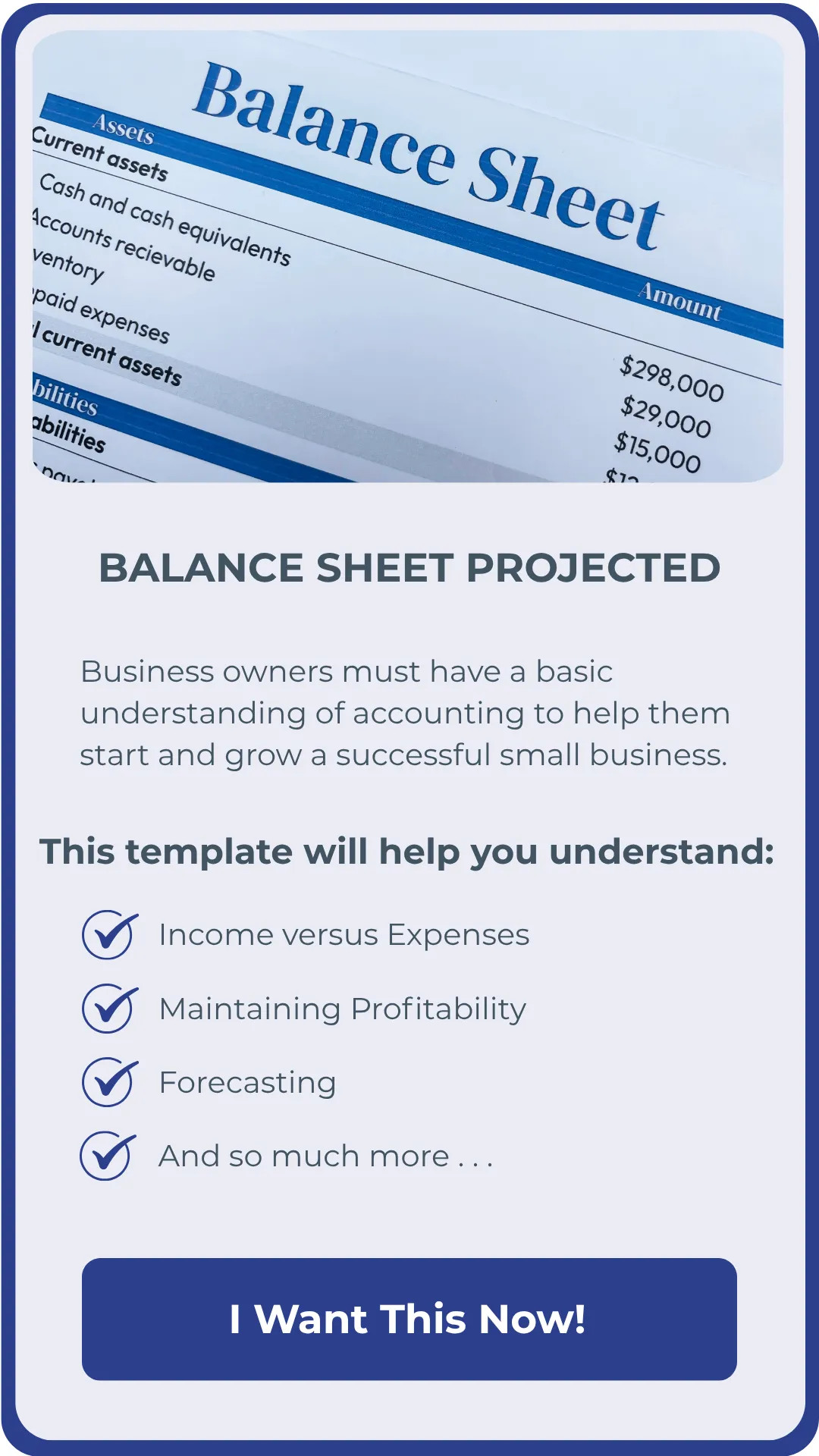
Balance Sheet - Projected
Unless you own an accounting business you are probably not a business owner that excited about the accounting process. Nonetheless, a basic understanding of accounting is important in helping you start and grow a successful small business, and the Balance Sheet is one of the three fundamental financial statements for a business - so you need to have an understanding of how it works.
The balance sheet helps you understand the relationship between your income and your expenses to maintain profitability.
Tips on using the Balance Sheet Template:
Combine categories to fit into this template, instead of adding lines.
Condense numbers for projections, such as expressing values in thousands.
Enter the "LESS Accumulated Depreciation" as a negative number. This will then be subtracted from the Total Fixed Assets.
In Owners' Equity the "Retained Earnings - Beginning" is the retained earnings from the last historical balance sheet or the end of the previous fiscal year, while "Retained Earnings - Current" is the net profit for the period of the projections, less any owner's draw or dividends paid.
Break-Even Analysis - Projected
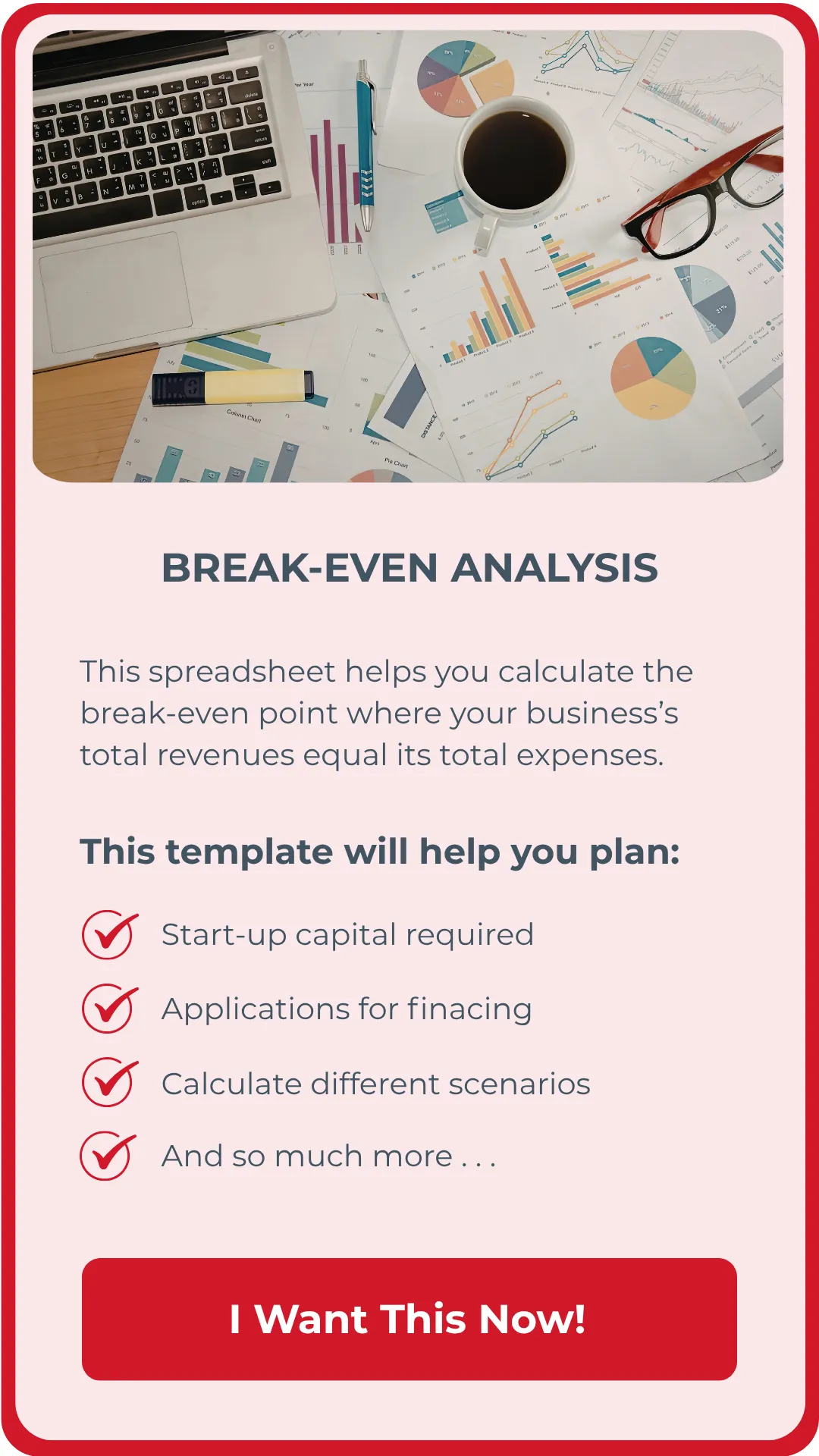
The Break-Even Analysis determines the break-even point of a business. This is when your business' total revenues equal its total expenses. After the break-even point, any additional sales will generate profits.
When should you use a break-even analysis?
This is a critical part of the financial projections in the business plan for a new business
Financial sources will want to know when your business will become profitable
This will help you plan the amount of startup capital that you will need
Existing businesses can also make use of the break-even analysis. For example:
How much extra money is needed to cover expenses when you add another employee to payroll?
How much extra money is needed to cover the monthly principle and interest payments of a new loan?
The daily, weekly, and monthly break-even numbers can be used for minimum sales targets.
Sales Forecast - 1 Year
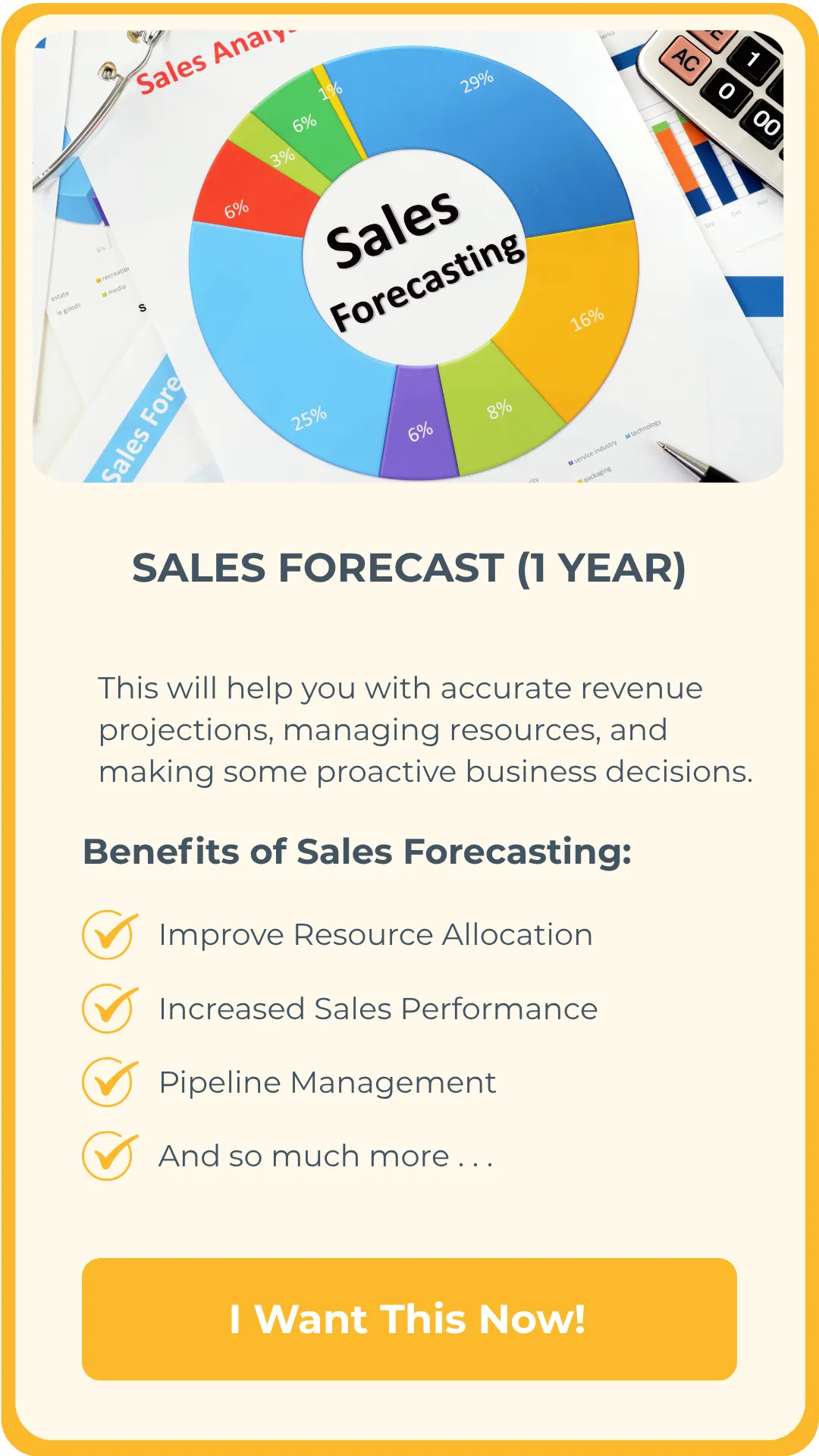
Forecasting sales of your product or service is the starting point for financial projections. The sales forecast is the key to the whole financial plan, so it is important to use realistic estimates.
Divide your projected monthly sales into "Categories" which are natural divisions that make sense for your type of business. Some examples:
Product Lines
Departments
Branch Locations
Customer Groups
Geographical Territories
Contracts
Financial History & Ratios - 1 Year
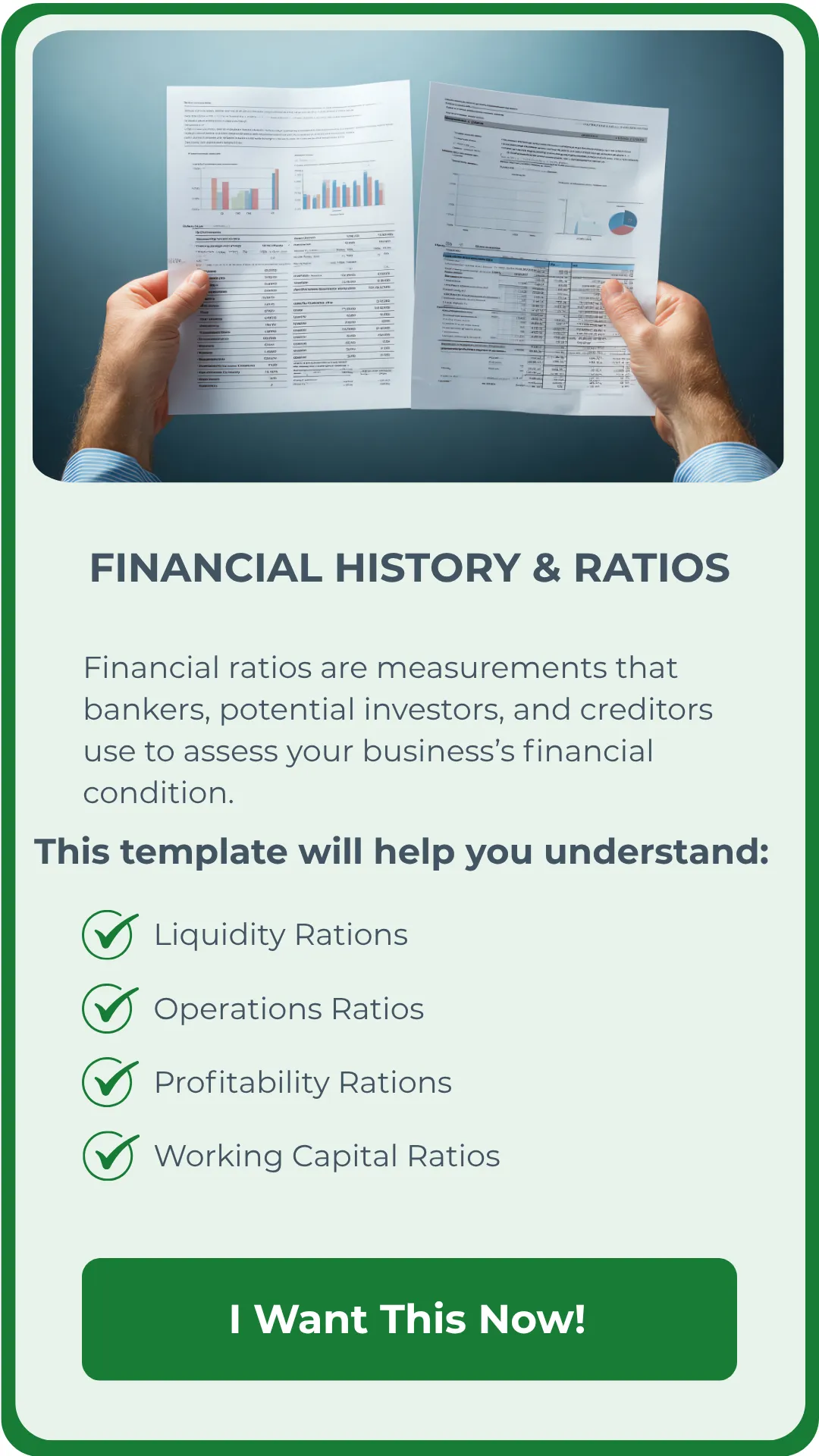
This template will help you determine how financially healthy your business is.
By gathering lots of financial data about your business in one place, the Financial History & Ratios template makes it easy to analyze your finances and spot significant trends.
Ratios assess four different aspects of your business:
Liquidity Ratios: Measures whether your business has enough cash to meet its short-term financial obligations.
Operations Ratios: Measures how successful your business operations are.
Profitability Ratios: Measures business profits and include the gross profit margin, net profit margin, and return on assets (ROA).
Working Capital Ratios: Measures how much money would be left if you paid current liabilities out of your current assets.
In order to complete the spreadsheet, you will need the past three years' financial statements for your business as well as your current year-to-date financial statements.
Regularly reviewing your financial ratios provides insights into your business' financial situation and helps you to keep tabs on its financial health.
Want to Learn Even More?
Our free resources are designed to help you take the first steps.
Our courses go deeper and teach you exactly how to build and grow your business.
Inside our courses you will learn:
Business strategy
Financial management
Marketing systems
Business operations
And Lot More.



COMPANY
CUSTOMER CARE
LEGAL
© Copyright 2026 | BizPro Resources | All Rights Reserved